












Hurricane
Helene
In September 2024, Hurricane Helene tore through Western North Carolina, shaking communities and straining the systems people depend on every day.
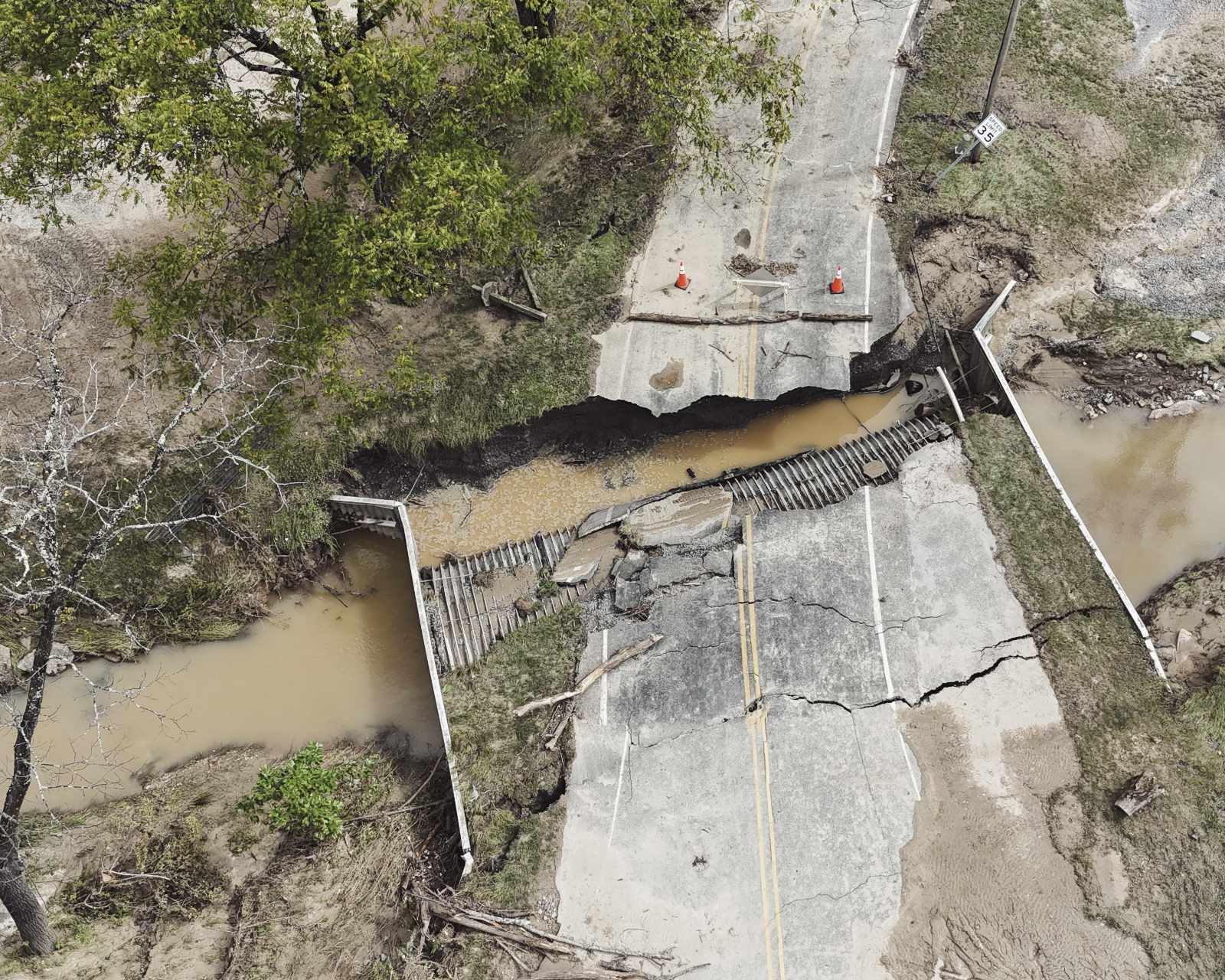
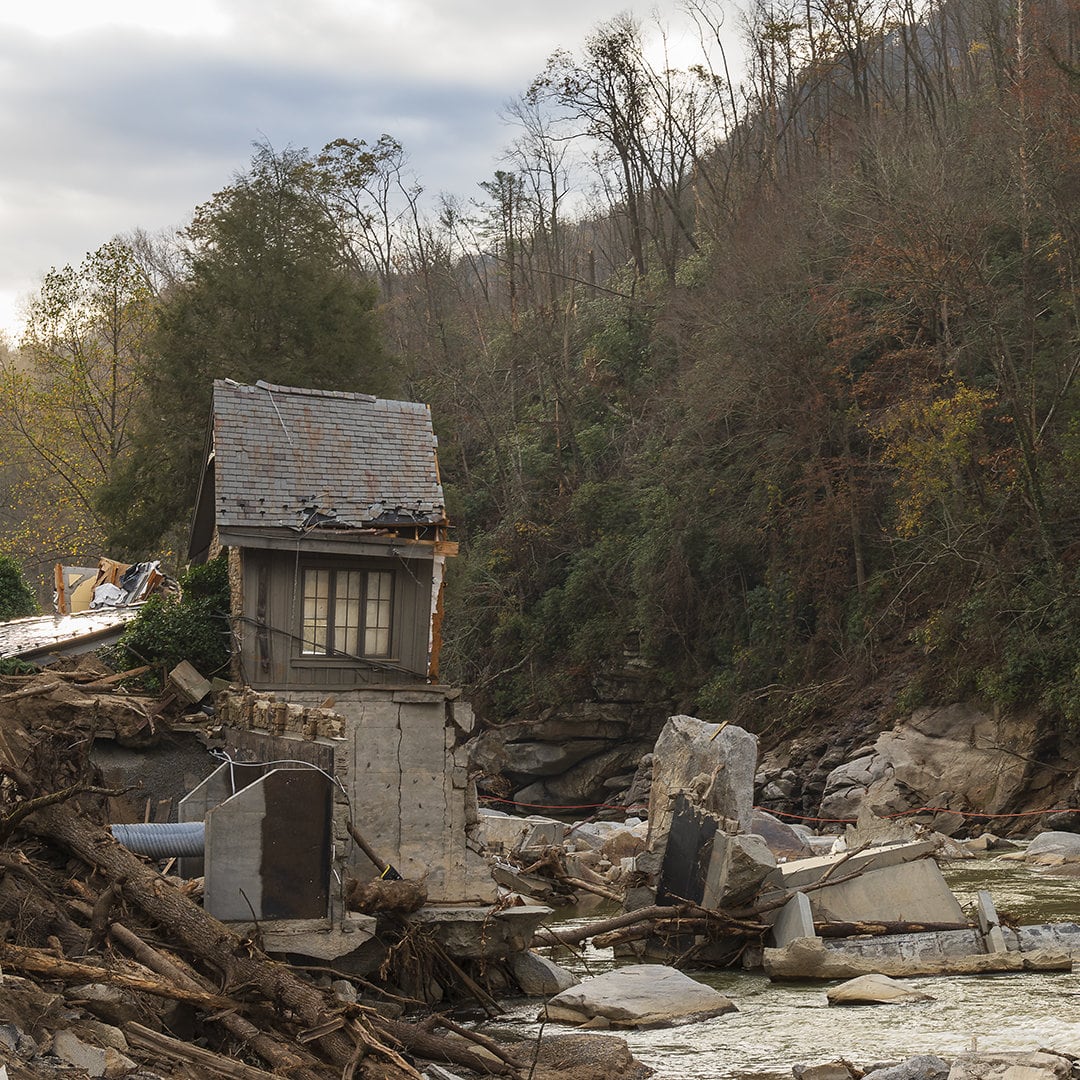
Photograph: Jacob Higgs (Windswept Hills)Roads were washed out. Power and water systems failed. Hospitals and nonprofits were pushed beyond capacity.
What began as a storm quickly became a test of every system communities depend on, threatening the health and wellbeing of the entire region.
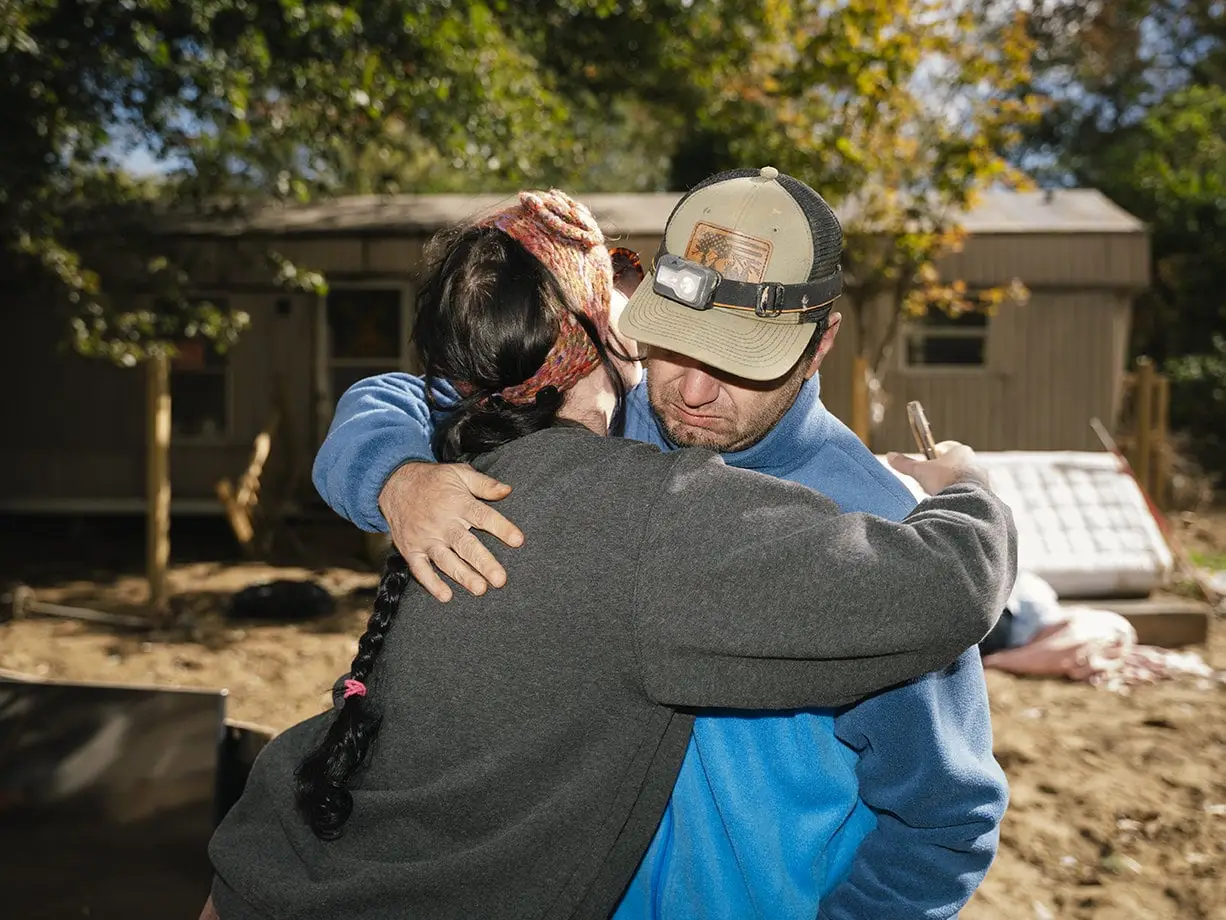
For many rural and mountain communities, isolation compounded the damage. Access to running water, food, internet, and phone service, healthcare and work disappeared over night. Families lost their homes and loved ones. Recovery would not be quick or simple. It required immediate effort, coupled with sustained action.
We are sharing our playbook — what we faced, how we responded and what we learned — as one part of a longer journey. This reflects how the work began, and how it continues, to help other funders prepare to act decisively in times of crisis.
What Western North Carolina Faced
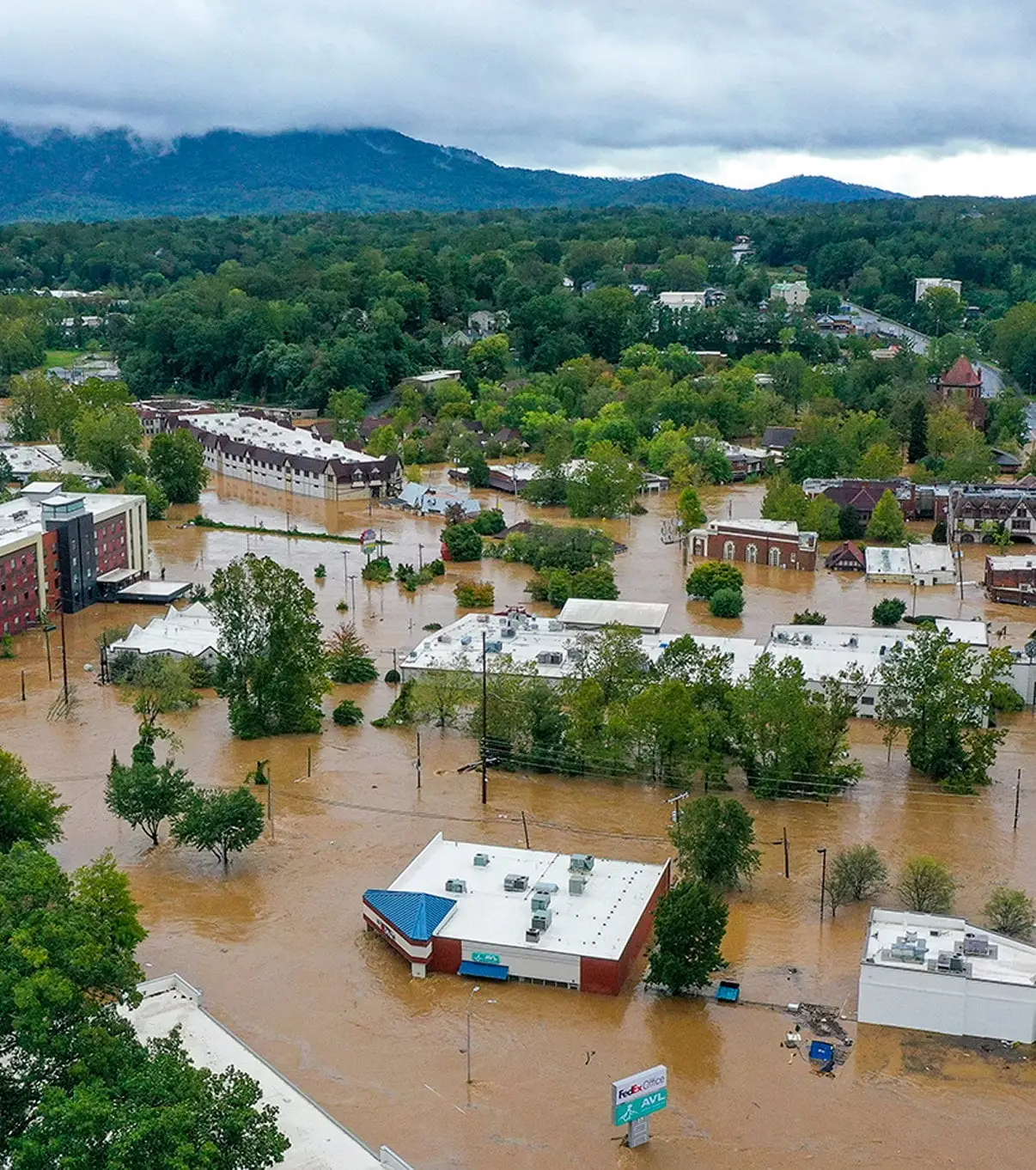
Hurricane Helene was not just a natural disaster; it was a systems disruption. Entire communities were cut off from necessities such as power, clean water, cell service and safe road access for weeks. Infrastructure failures across rugged terrain made response efforts to address the urgent health needs of the community slower and more complex.
Western North Carolina is one of the most rural regions in the country. Many residents live far from where they work, shop for necessities, go to school or receive care. When roads collapse and communications fail, that distance becomes dangerous. The health and economic impact of the storm extended far beyond the areas with visible damage.
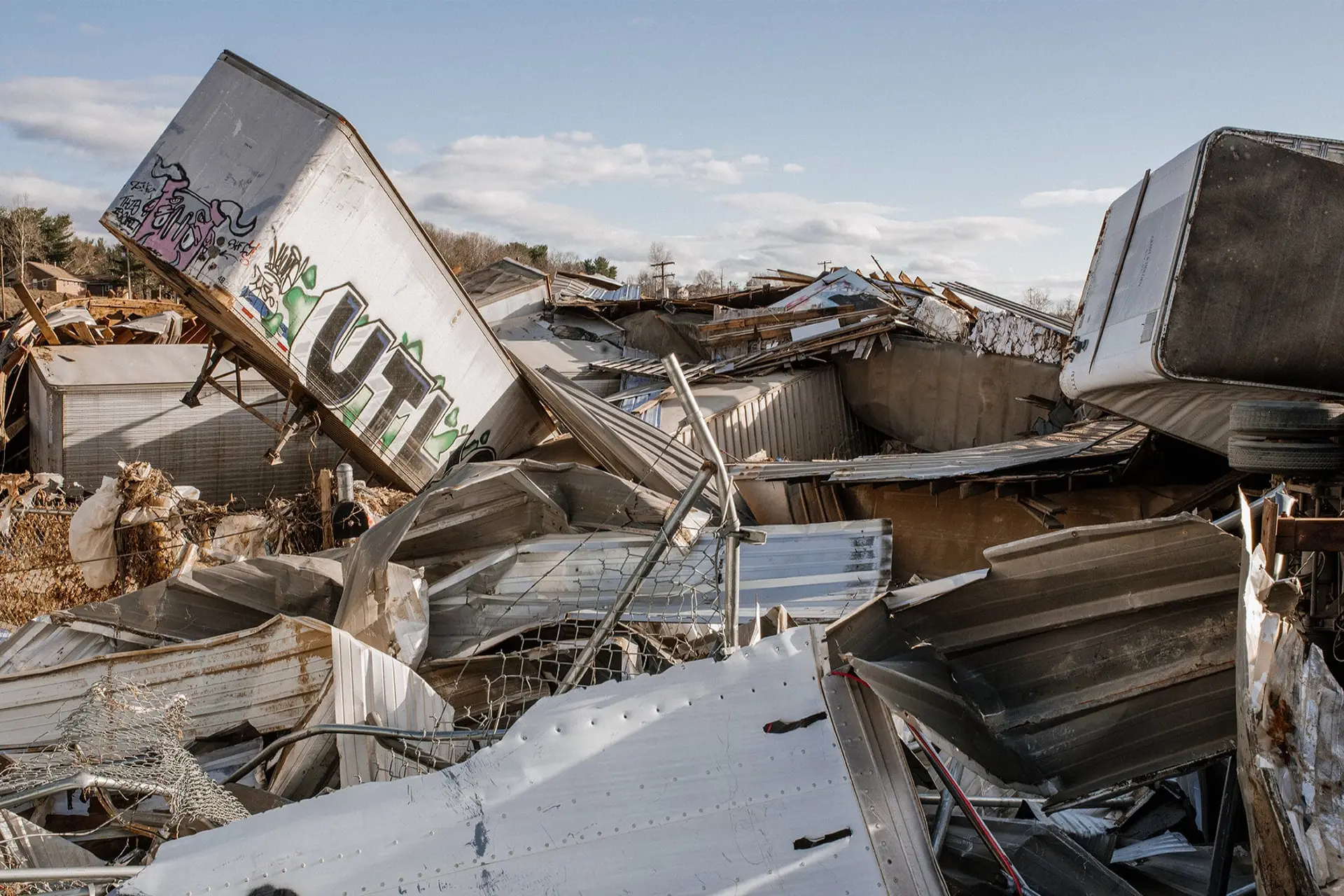
Mike Belleme (River Arts)
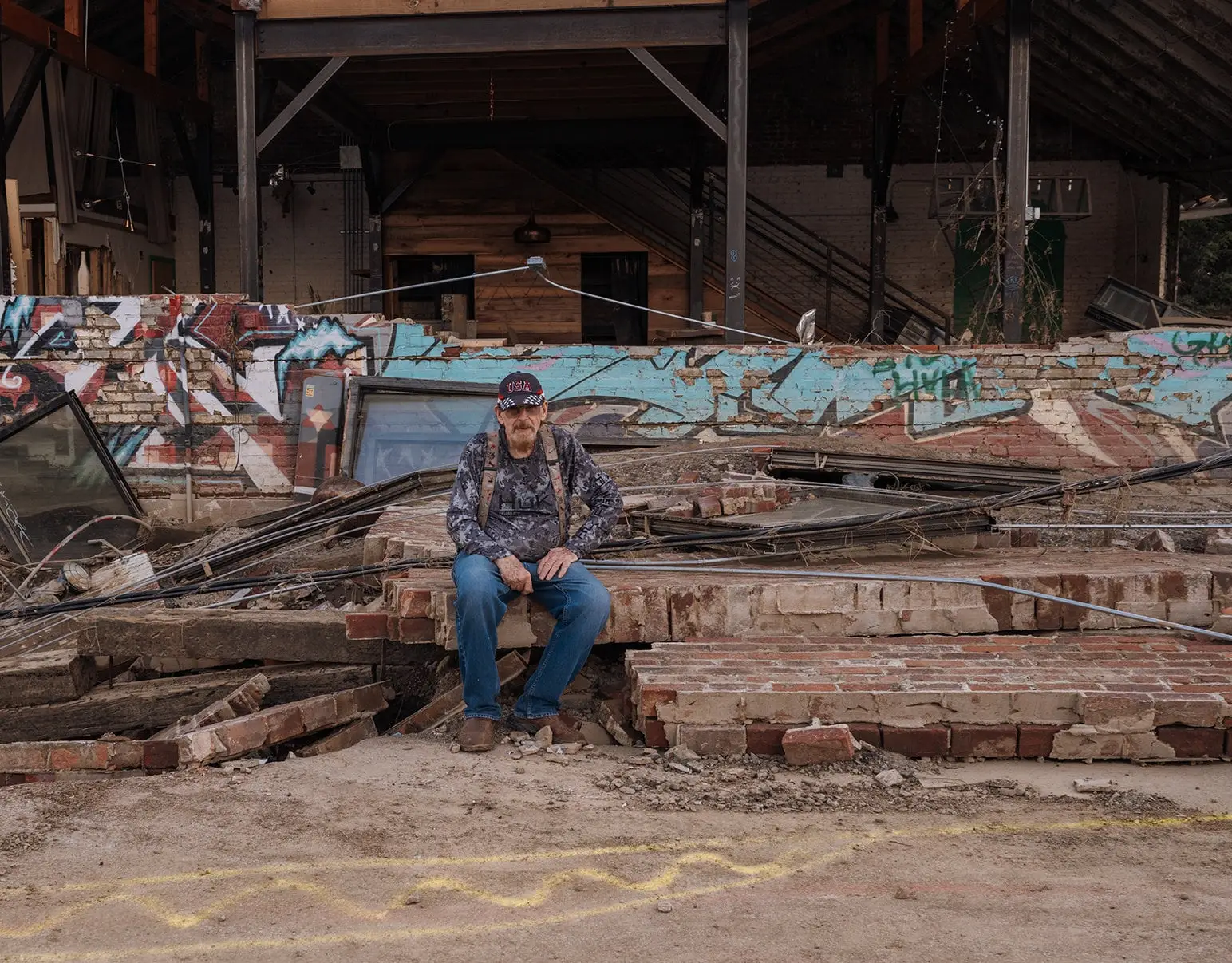
Corey Biskind (The Vendor Sits)
As one Dogwood Health Trust grantee partner reflected, “The road to recovery is long… and the economic impact is much broader than I think people fully see.”
[Dogwood] provided funding to us, to other Federally Qualified Health Centers and to intermediary organizations so we could continue operating without losing staff. We were concerned about employees needing to find other work and not being able to come back. That support made an immediate difference. It allowed us to keep serving the community and created an amplifying effect because it was a trust-based investment in our work.”
— Dogwood Health Trust Grantee Partner
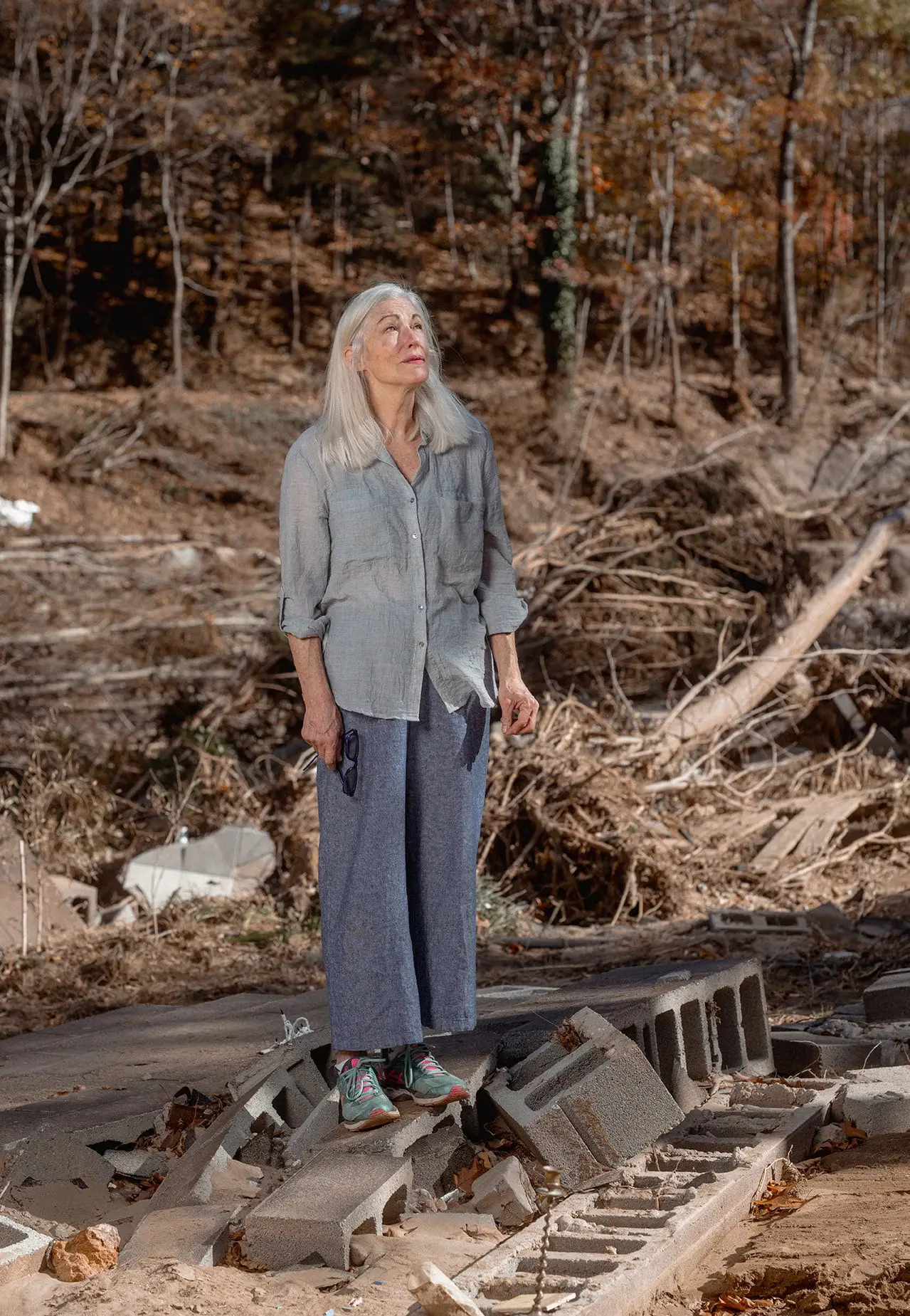
Mike Belleme (Rebecca)
Jacob Higgs (Disconnected)
Paola Chapdelaine (Neighbors)
Recovery demands long-term commitment, local knowledge and sustained partnership, often unfolding over years — and in some cases, decades.
Hurricane Helene Response Timeline
Introduction
When the Storm Passed, We Quickly Got to Work Alongside the Community
In the immediate aftermath, speed mattered. We prioritized flexible support for trusted, local nonprofit organizations so they could respond without delay. Federal, state and other resources would take time. Our communities could not wait.
Experience across the region underscored that scale, speed and flexibility were critical drivers of action, enabled by strong relationships and a place-based, trust-centered approach.
Robbie Francis (Biltmore Village)
Our focus was clear: reinforce and deepen the work already happening. We provided flexible operating support that allowed nonprofits, health providers and small businesses to stabilize quickly and serve their communities.
Audio clip player
Transcript will appear here when the audio plays.
Water, Power & Cell Service Down
Major highways closed, isolating region
EPA begins testing drinking water
FEMA arrives; unified command established
1 Week
Within the first week
In the days immediately following the storm, Dogwood worked with trusted regional partners to coordinate relief, strengthen capacity and begin mobilizing resources. Our board gathered together to ensure a swift and aligned approach. Early efforts focused on stabilizing essential services and helping organizations respond quickly to urgent needs across Western North Carolina.
Water, power & cell service down
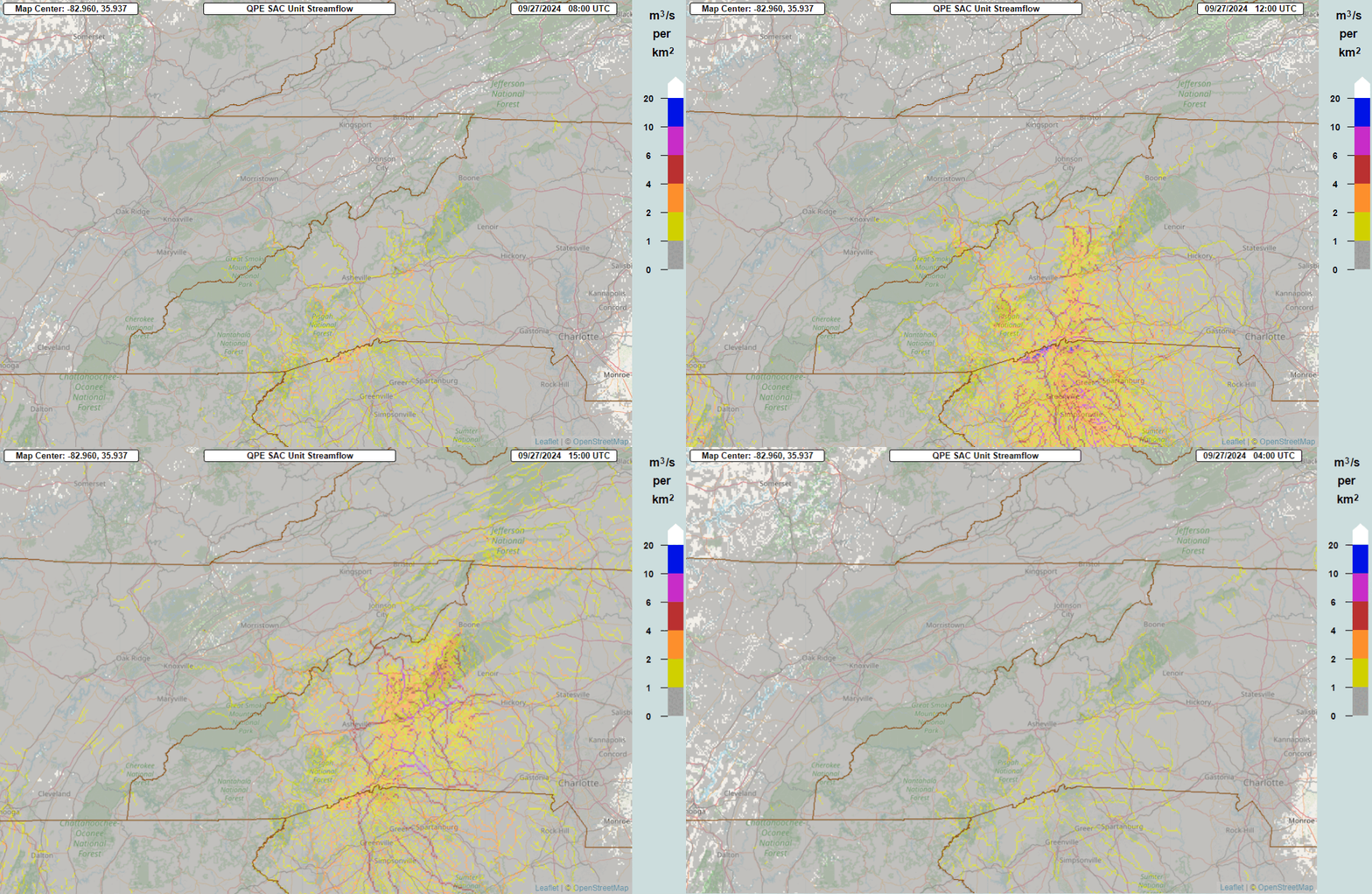
These images are an estimate of the amount of water flowing through rivers and streams based on a radar estimate of rainfall. Rivers and streams in western North Carolina were already running high (yellow and orange) at the start of the animation at midnight on September 27. The streamflow jumps rapidly later that morning as bands of heavy rain associated with Helene spread into the area.
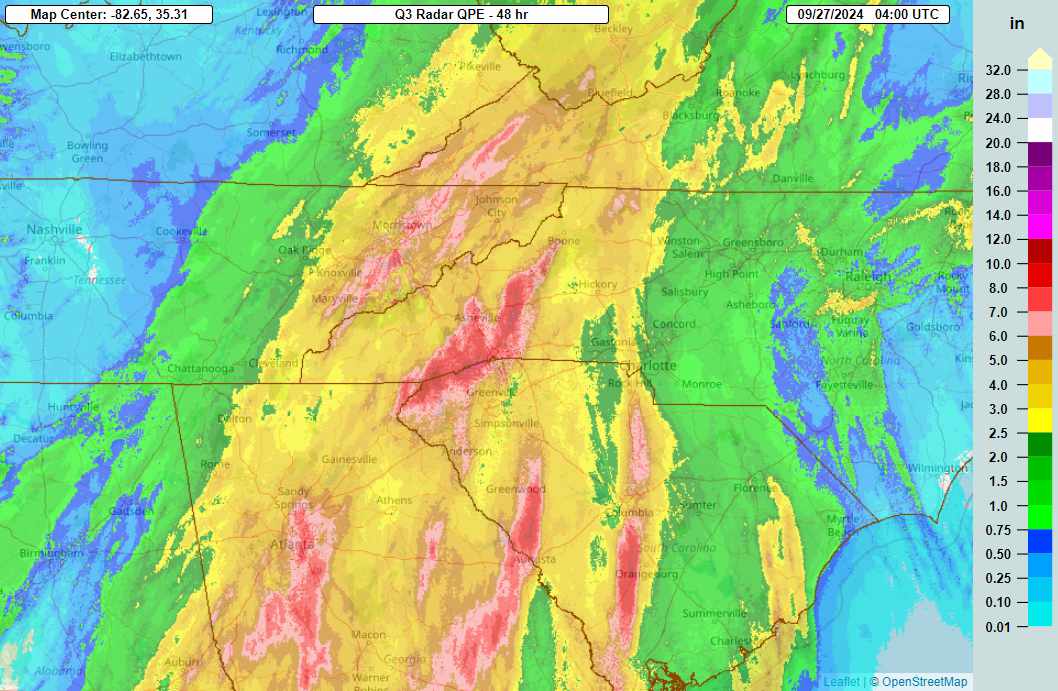
Total rainfall estimated by rainfall ahead of Helene was in the range of 6 to 10 inches in the upslope areas of western North Carolina by midnight of September 27. A strengthening easterly flow on the east side of the stalled front and north of Helene encountered the mountains, causing the very moist air to rise and locally enhance rainfall on the eastward facing slopes of the Blue Ridge. (National Weather Service)
Major highways closed, isolating region
October 1, 2024
Relief Coordination Begins with The Community Foundation of Western North Carolina and WNC Bridge Foundation
Learn MoreEPA begins testing drinking water
FEMA arrives; unified command established
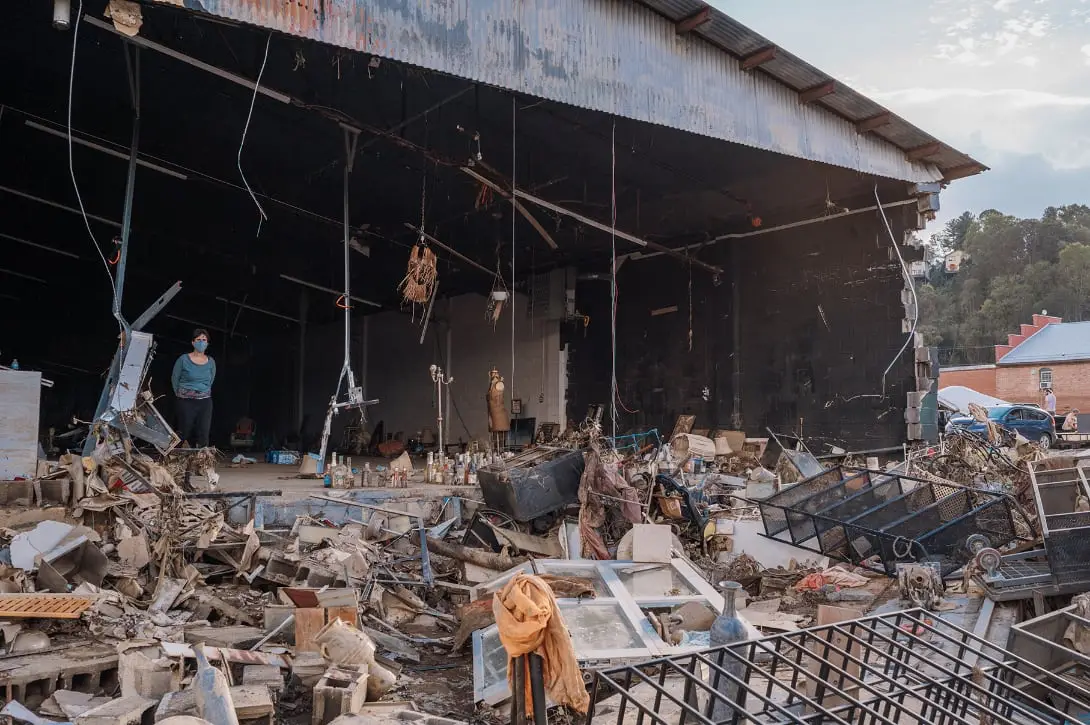
Corey Biskind (Broken Open Spaces)
Cell and power restored to most residents
I-26 reopens
Henderson County reopens to visitors
1 Month
Within the first month
As the emergency response stabilized, medium-to-long-term needs came into focus. Housing damage, small business disruption and nonprofit strain required expanded support. We increased investments in housing stability, FEMA navigation, legal services and economic recovery.
Cell and power restored to most residents
Early relief resources helped support:
Across the region, timely and flexible support gave organizations the confidence and freedom to act quickly, ensuring staff could meet needs in real time and innovate when other funding sources were constrained.
Audio clip player
Transcript will appear here when the audio plays.
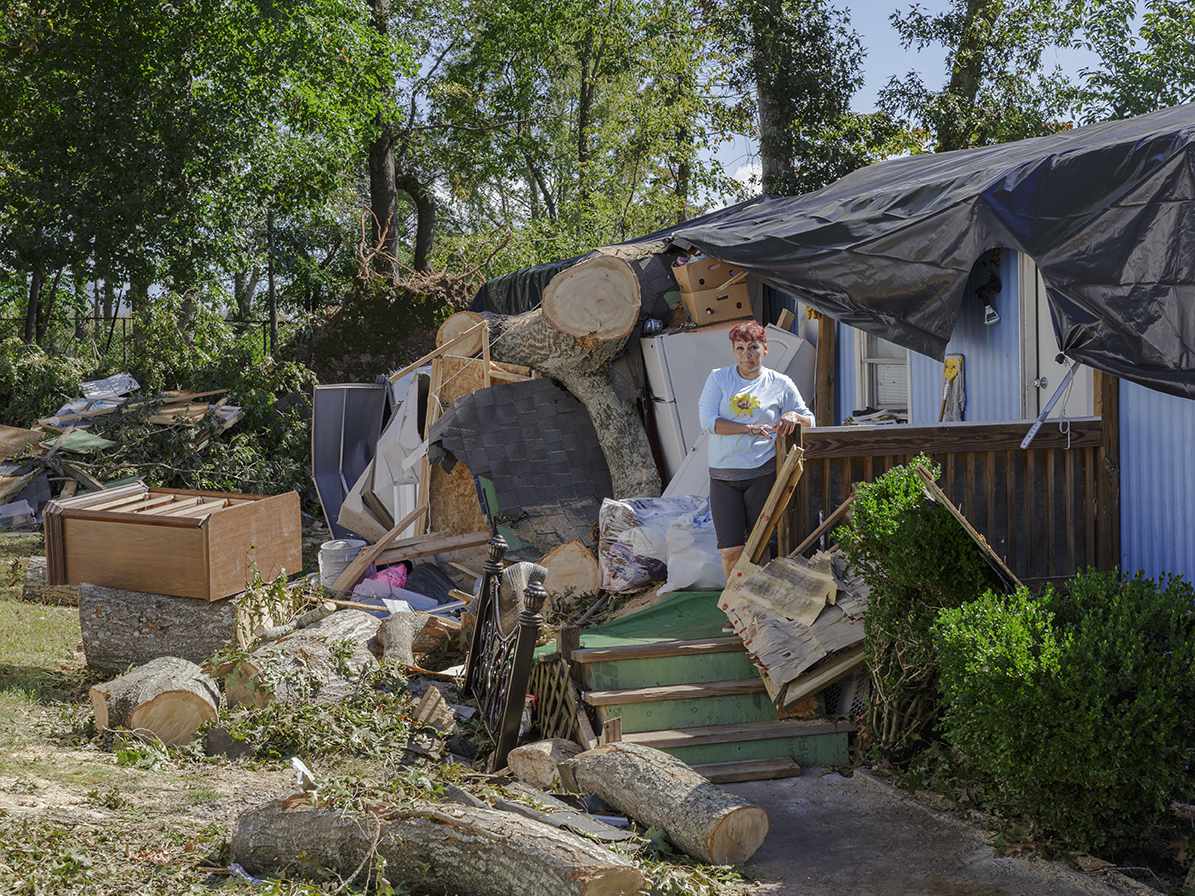
Juan Diego Reyes (Total Loss)
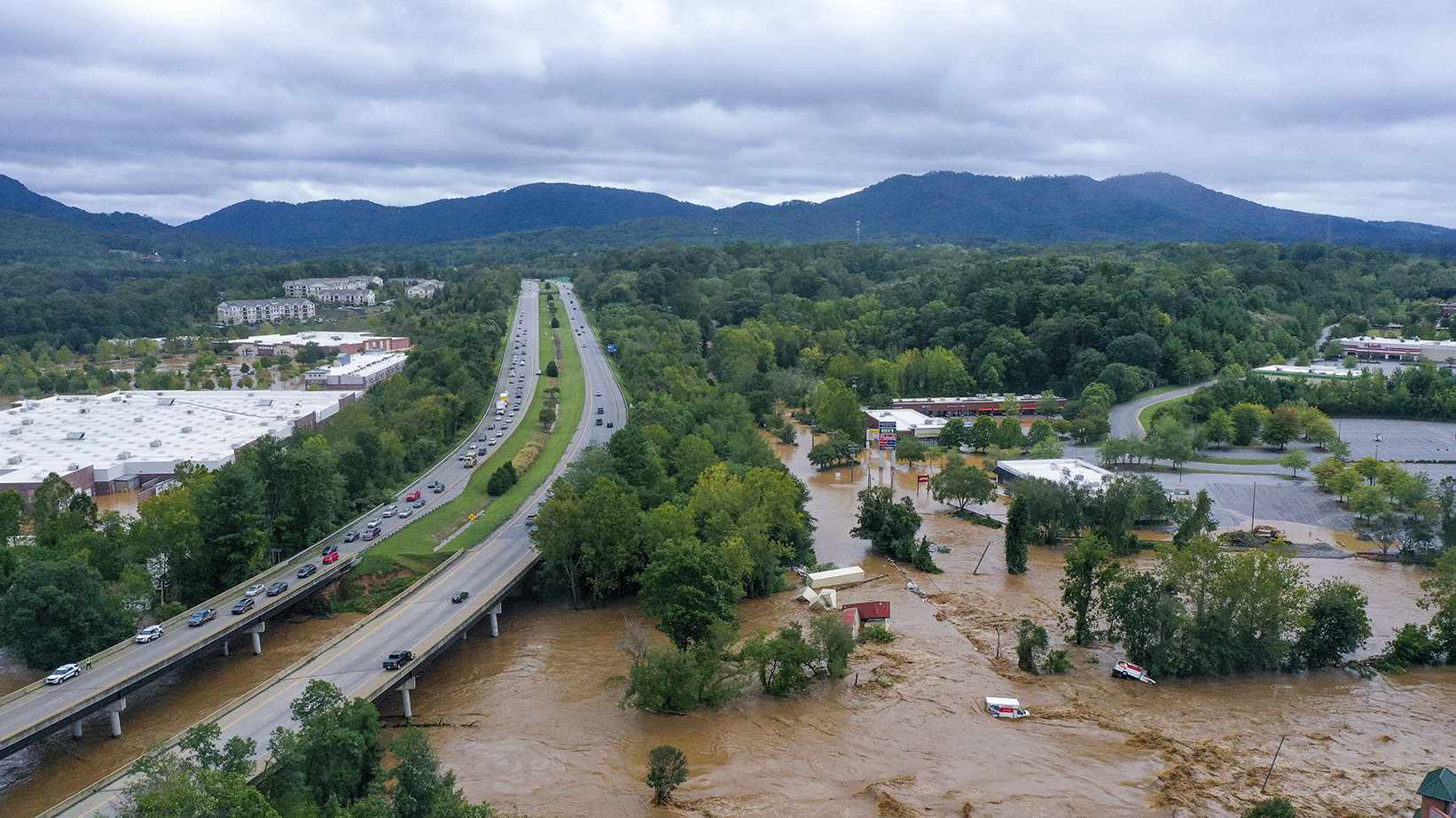
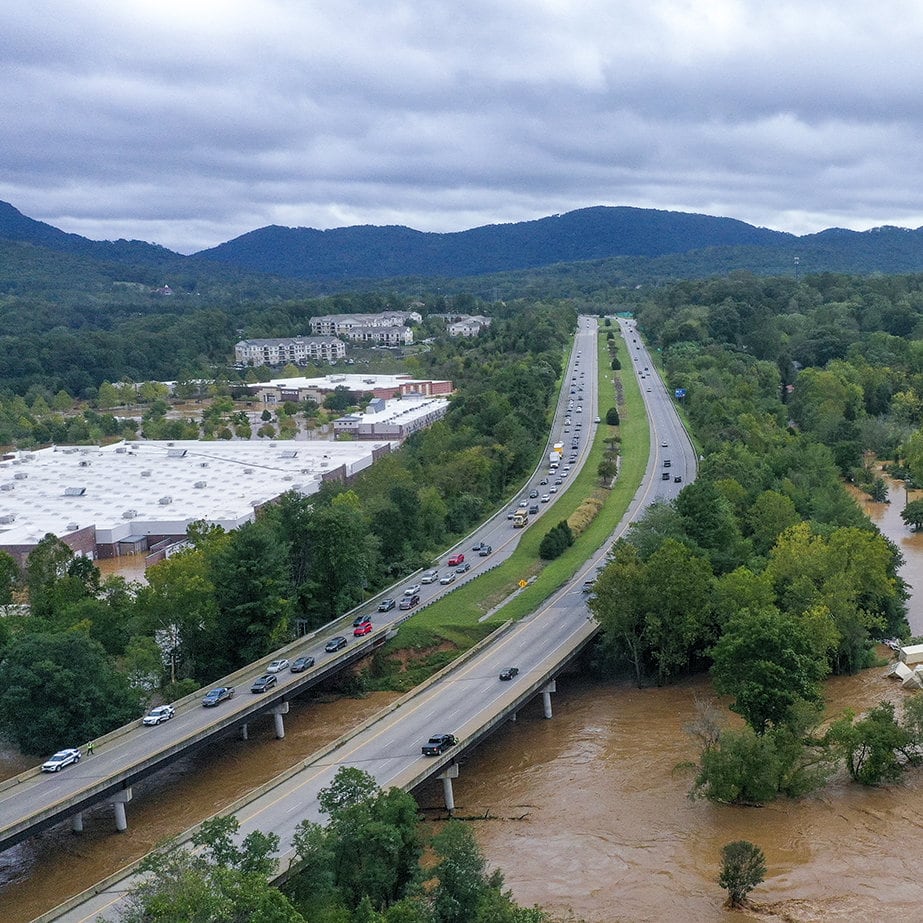
Robbie Francis (240 over Swannanoa River Road)
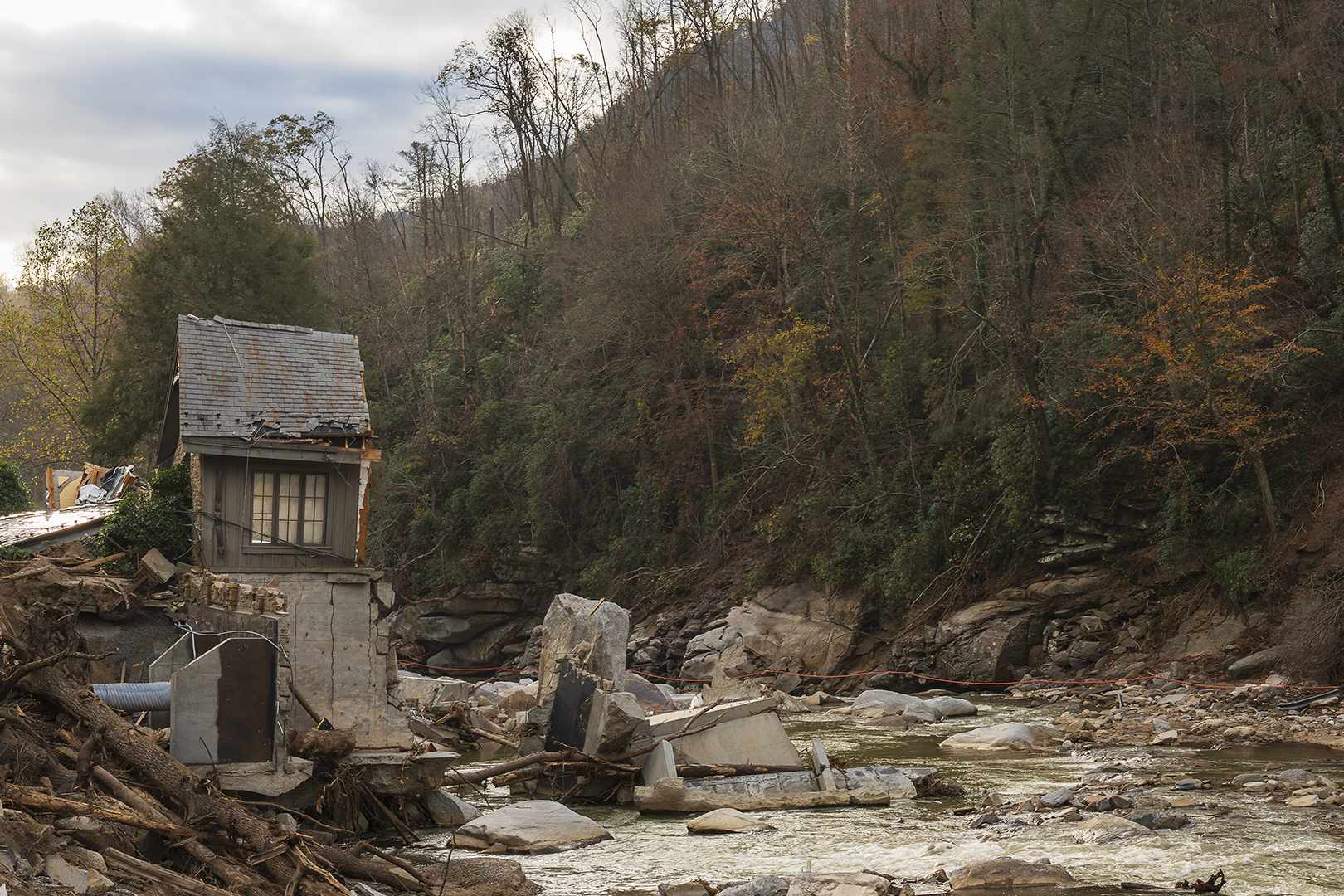
Tanya Triber (What Remains)
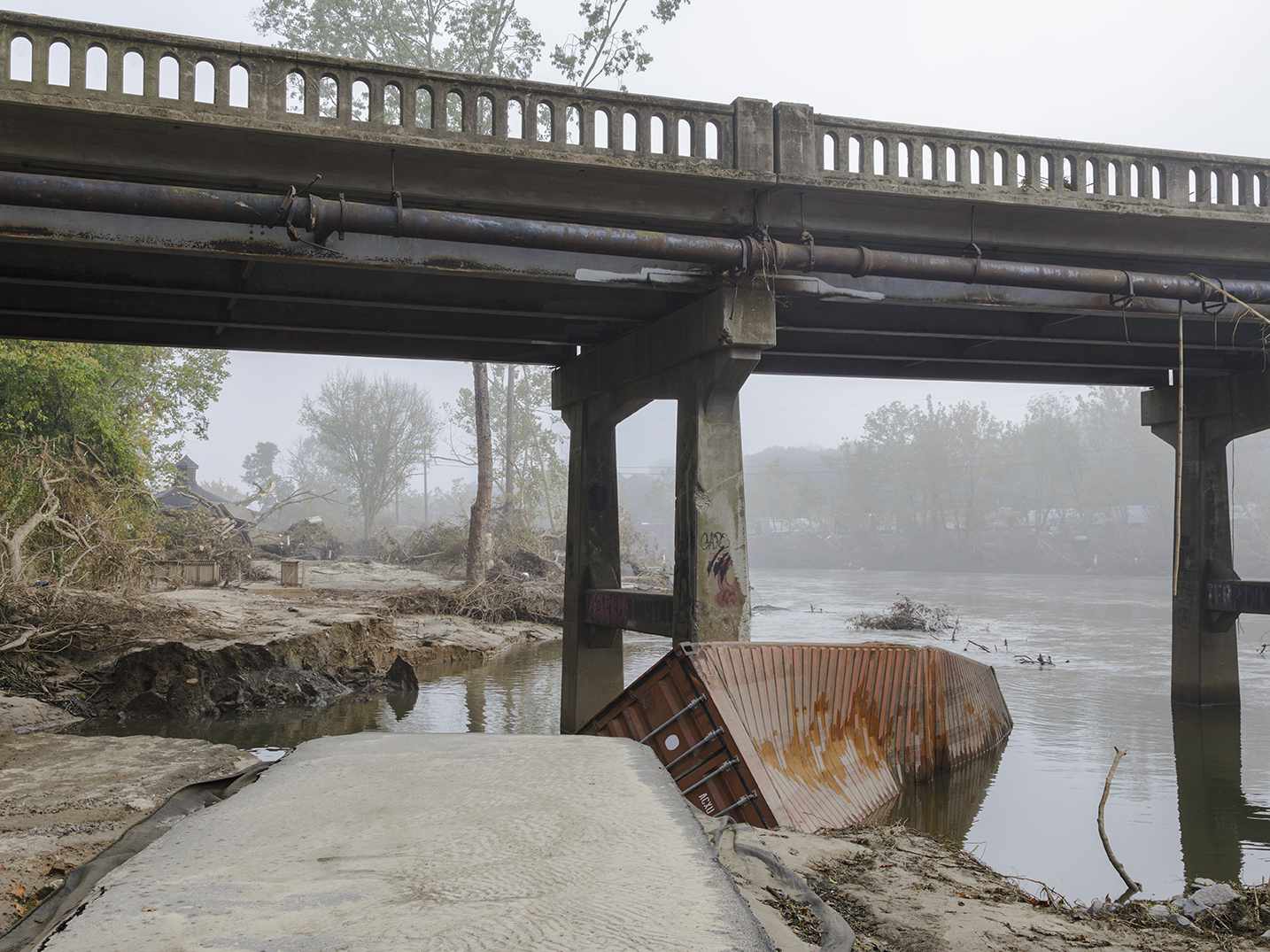
Juan Diego Reyes (Greenway)
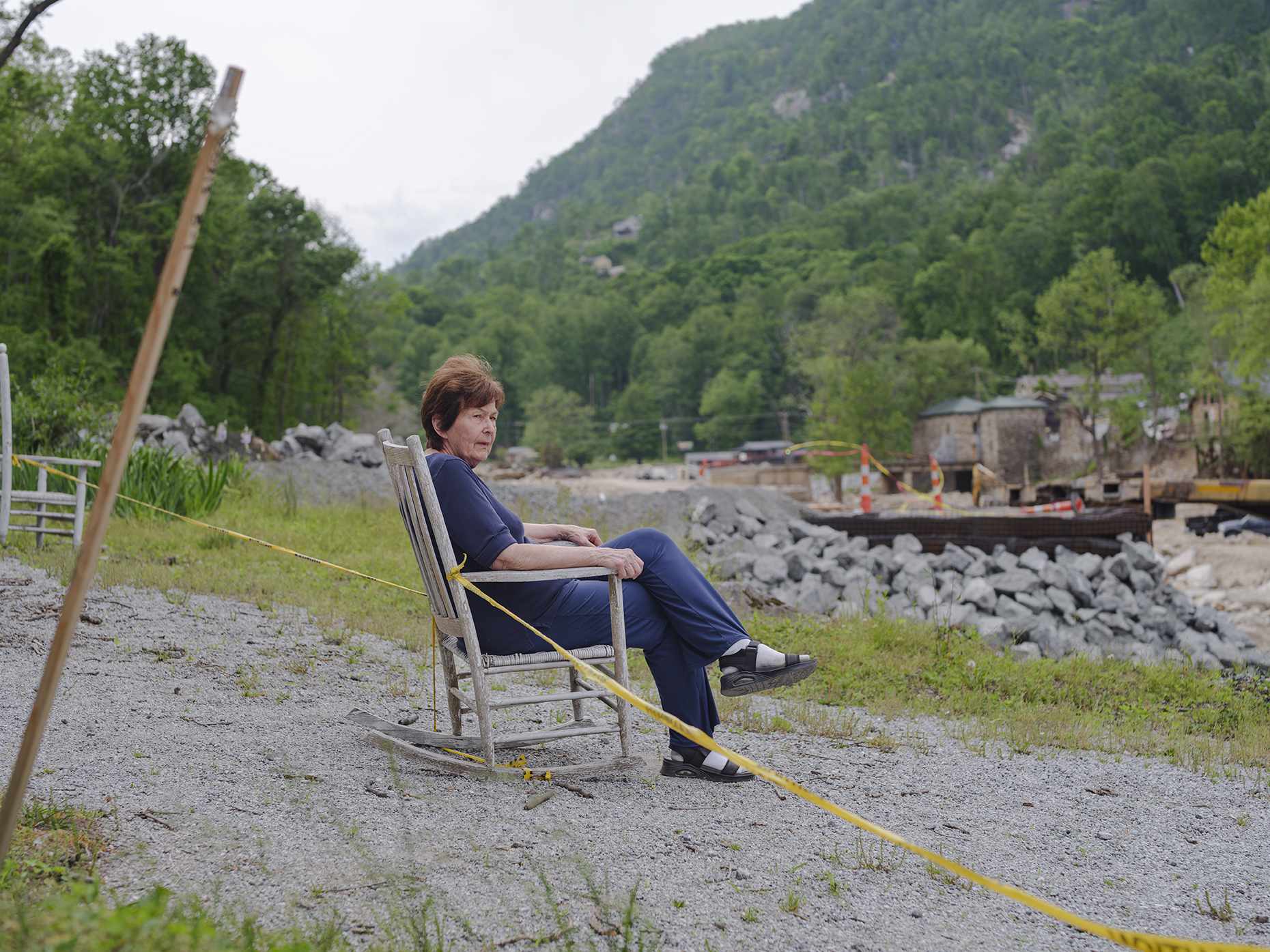
Juan Diego Reyes (Building Back)
Our coordinated approach was rooted in trust and in our equity commitments, ensuring that resources reached the people, organizations and businesses most affected by the disaster.
Our coordinated approach was rooted in trust and in our equity commitments, ensuring that resources reached the people, organizations and businesses most affected by the disaster.
October 28, 2024
Additional $20+ million announced for Hurricane Helene relief and recovery
Learn MoreI-26 Reopens
Henderson county reopens to visitors
Clean tap water fully restored in Asheville
Yancey County School District last to reopen
McDowell County mobile clinic deactivated
3 Months
Within three months
Three months after the storm, recovery needs were evolving. Nonprofits were managing burnout. Behavioral health concerns were rising. Housing instability and financial stress persisted. Federal funding delays and changes created uncertainty across the region.
We continued focusing on short-term relief while strengthening long-term resilience. Stabilizing nonprofit capacity, supporting small businesses and sustaining essential services remained central to protecting the region's future.

Early relief resources helped support:
As recovery efforts continued, long-term recovery groups (LTRGs), local governments and nonprofit partners played a critical role in helping communities navigate complex systems and access federal resources. Supporting this work became essential to ensuring that funding could reach the people and places that needed it most.
For many early childhood educators, recovery has been deeply personal. One educator described how the storm affected her ability to continue supporting children and families in her community:
CLEAN TAP WATER FULLY RESTORED IN ASHEVILLE
Audio clip player
Transcript will appear here when the audio plays.
Yancey County School District Last to Reopen

Rene Treece (Hope)
McDowell County mobile clinic deactivated
Audio clip player
Transcript will appear here when the audio plays.
Erin Brethauer (Mothering 006)
WNC Funder Collaboration
Relief funding total: $80 million
October 2024 - January 2025
What We've Learned
Kai Lendzion (Love Walks Through Ruin)
Hurricane Helene has reinforced the importance of preparation, partnership and clarity of purpose. Systems can fail quickly. Trusting relationships help communities respond just as quickly.
Flexible funding enables speed. Local knowledge directs resources more effectively than distant decision-making. Long-term recovery requires sustained strategy, not just immediate generosity.
Disasters have a way of revealing the deeper challenges communities were already facing. For Dogwood, the Helene response has reinforced the importance of aligning disaster relief with longer-term strategies to improve health and wellbeing across Western North Carolina.
Above all, we continue to witness the resilience of our people. Organizations and individuals show up for one another even while navigating their own loss and uncertainty.
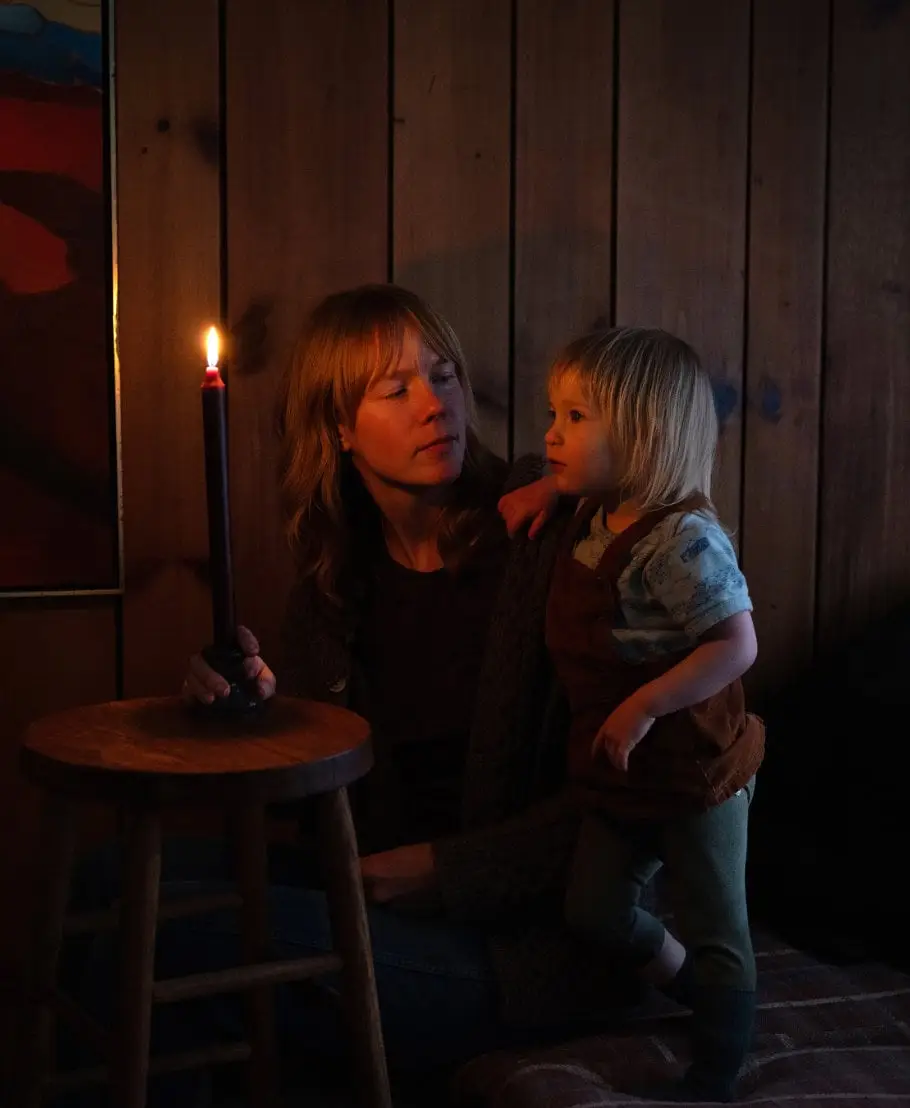
Erin Brethauer (Mothering 003)
These lessons are not static; they continue to evolve as recovery unfolds and as partners across the region adapt to new challenges and opportunities.
Key Lessons
Stay True to Purpose
In moments of crisis, it can be tempting to move quickly without grounding decisions in a clear sense of purpose. Following Hurricane Helene, we saw that organizations are most effective when they stay anchored in their mission, even as they adapt to changing conditions.
Dogwood's response was not built from scratch. It drew on an existing commitment to improving health and wellbeing across Western North Carolina and applied that framework to an emergency context. This made it possible to act quickly without losing clarity around our strategic priorities of housing, education, economic opportunity and health and wellbeing.
Even in the earliest stages of response, funding was directed toward areas that aligned with our long-term priorities, including maintaining critical health services, supporting housing stability and strengthening economic opportunity through efforts like the Western North Carolina Small Business Initiative. This ensured that immediate relief efforts also contributed to longer-term recovery.
Staying true to purpose does not mean staying rigid. It means using your mission as a guide while responding to real-time needs. In practice, this meant actively listening to partners, supporting what was already working and trusting organizations closest to the community to lead.
Over time, this approach helped ensure that resources were aligned not only with immediate needs, but with long-term outcomes and leadership for the region.
Trust Enables Impact
One of the clearest lessons from Hurricane Helene is that trust-based approaches are not just values-driven, they are operationally effective.
Providing flexible funding, including general operating support, allowed organizations to respond immediately without waiting for approval or navigating complex requirements. In the early days of relief response, this flexibility made it possible for grantee partners to stabilize staff, maintain services and reach communities quickly.
For example, partners described how having access to flexible funding allowed them to make decisions in real time, whether that meant retaining staff, expanding services or responding to unexpected needs. In many cases, it was not just the funding itself, but the confidence that came with it that allowed organizations to act quickly and effectively.
Dogwood's flexible funding also differed from alternative, public sources of funding, which had greater limitations. Partners consistently described this as a turning point. When organizations are trusted to use resources based on their knowledge of local needs, they can act faster and more effectively than any centralized approach.
Trust also reduces friction. Simplifying processes and reducing reporting requirements allowed organizations to focus on the work itself, rather than administrative tasks.
In a disaster context, this kind of support is not just helpful, but can determine whether an organization is able to continue operating at all. It also offers steadiness so that organizations can look to the future and envision with the community what might come next.
Relationships & Networks Make Things Go
Strong relationships and local knowledge are essential to an effective disaster response. No single organization can respond to a crisis of this scale alone.
Across Western North Carolina, the relief response was shaped by networks of partners working together. Local nonprofits, funders, intermediaries, health providers and community leaders all played a role in identifying needs, coordinating resources and reaching communities that might otherwise have been missed.
For example, Dogwood worked closely with funding partners like The Community Foundation of Western North Carolina, WNC Bridge Foundation, AMY Wellness Foundation and Gateway Wellness Foundation to coordinate relief efforts early on, helping to align resources and respond quickly to urgent needs. Earlier pre-Helene Dogwood investments in networks associated with Pisgah Legal Services, Impact Health, WNC Communities and Community Development Financial Institutions also helped deploy resources efficiently and in trusted ways.
These connections also made it possible to bring in additional support over time. By working through trusted partners and established networks, Dogwood helped create opportunities for state and philanthropic funding to flow into the region, reinforcing and expanding the initial response.
At the same time, this work highlighted the importance of proximity. Organizations with deep roots in the community are best positioned to understand what was needed and how to respond.
Building relationships and strengthening networks before a disaster occurs is what makes coordination possible when it matters most.
Speed & Equity Both Require Intention
The speed and intensity of Hurricane Helene required organizations to make decisions quickly, often with incomplete information and rapidly evolving needs.
Dogwood coordinated a response aimed at upholding its equity commitments and ensuring that resources reached the people, places, organizations and small businesses most affected by the storm. This meant designing relief efforts specifically to support the communities and populations experiencing the greatest impacts. Doing so required intentionality, communication and real-time learning, even amidst urgency.
Helene's impacts were not evenly distributed across the 18-county region Dogwood serves. Some communities experienced catastrophic damage, while others faced different levels of disruption and recovery needs. In many cases, the regional economic effects extended beyond the areas that experienced direct physical damage. Response efforts were further complicated when trusted community connectors and local leaders were themselves affected by the storm, slowing communication and access to communities already experiencing disconnection or longstanding barriers to institutional trust. This required intentional decisions about geographic equity and where resources could have the greatest impact.
At the same time, the response reinforced the importance of asking deeper questions about who may not be reached through more traditional systems and networks. In the days, weeks and months after the storm, Dogwood used available data from local partners and institutions to inform our geographic and community-focused equity decisions, drawing on demographics, power outages, school and road closures, fatalities and grants management data. Dogwood also realized a need to deepen and build relationships with immigrant-serving organizations, grassroots groups, faith communities and mutual aid networks before disasters occur, recognizing that many of the people served by these partners may experience additional barriers to access in recovery efforts. For example, the immediate aftermath of the hurricane underscored the importance of language access and culturally responsive communication. In some cases, grantee partners used Dogwood's support to adapt materials and applications in real time-including translating resources into Spanish-to ensure communities could access support as quickly as possible.
Ultimately, the experience highlights that equity is about more than distributing resources evenly; it is about understanding who has been most affected, who was already experiencing disinvestment or disconnection before the disaster and what support is needed to ensure resources reach those communities effectively.
As the response evolved, so did the understanding of where gaps existed and how partnerships, communication and relationship-building could strengthen future recovery efforts across the region.
Stories & Features
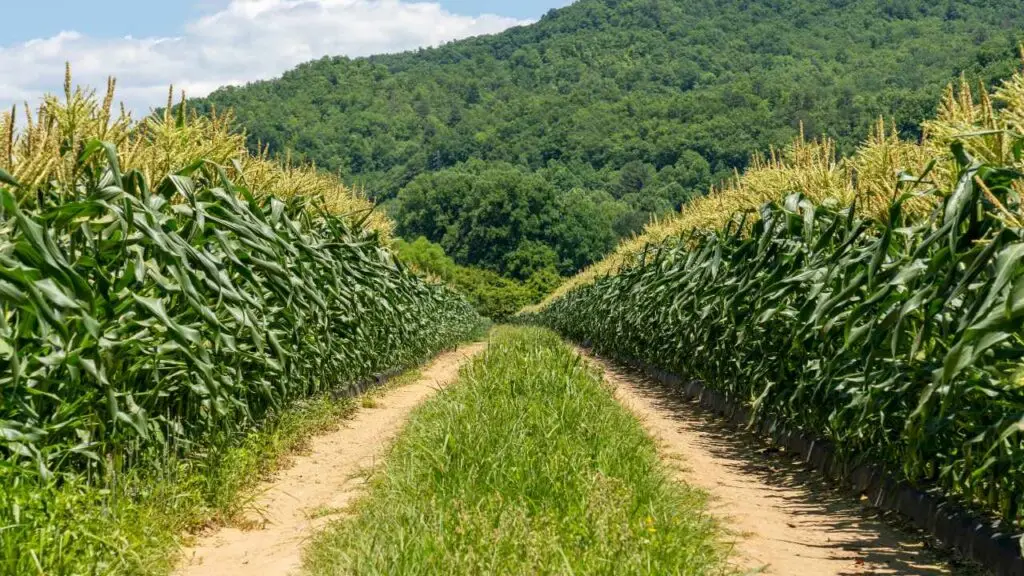
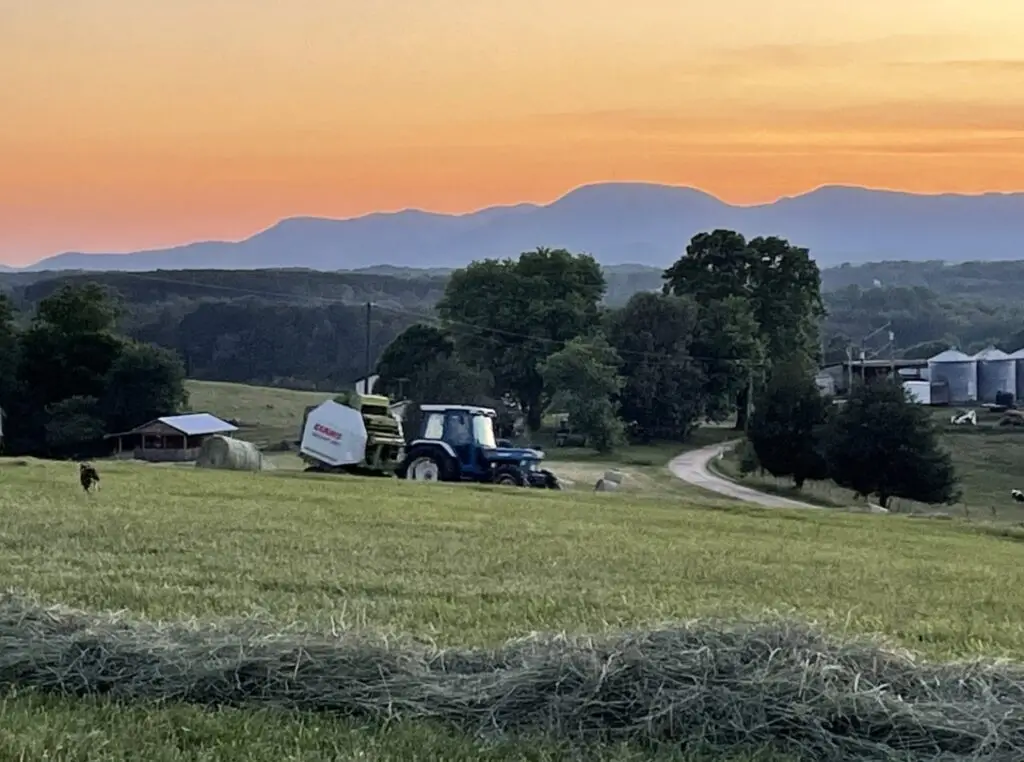
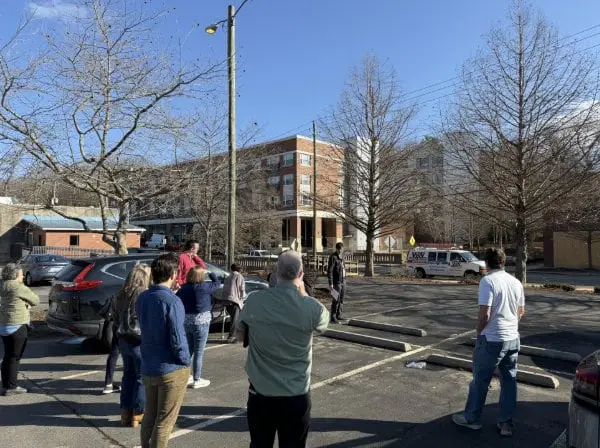

From Lifesaving to Stabilizing: How Timing Shaped the Impact of Cash Aid After Hurricane Helene
Read MoreWant updates? Let's stay connected.
Thanks for listening to our story. We will continue sharing insights and practical tools from Western North Carolina with the philanthropic field.
Keep Your Team Prepared
Download our Disaster Readiness and Response Checklist to explore practical questions, considerations and lessons that can help your organization prepare for the future.
Download Now
And the Work Continues.
Recovery from Hurricane Helene did not end after the first weeks or months. Across Western North Carolina, the work continues as communities recover and begin to rebuild. Long-term recovery groups, nonprofit partners, local governments and community members are navigating rebuilding efforts, accessing state and federal resources and addressing needs that will persist for years to come.
Dogwood's role continues alongside these partners through ongoing grantmaking, capacity building and coordination — supporting efforts to recover, rebuild and strengthen systems across housing, education, the economy, health access, and the broader foundations of community wellbeing over time.
This is not a fixed timeline. Recovery is an ongoing process, and rebuilding will take time. The needs of Western North Carolina will continue to evolve. We are committed to evolving with them.
With Gratitude
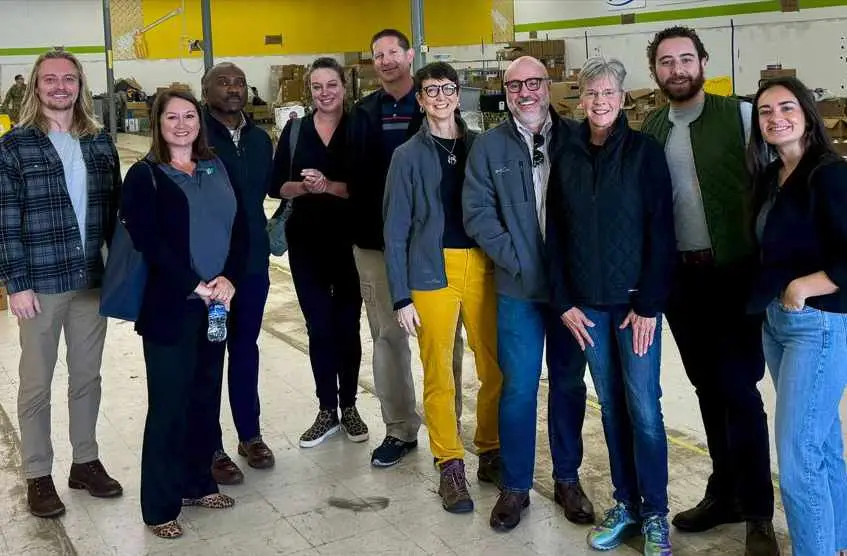
We are deeply grateful to the partners, organizations and community members who have led this work across Western North Carolina. This response was not the work of any one organization, but the diligent and collective effort of many.
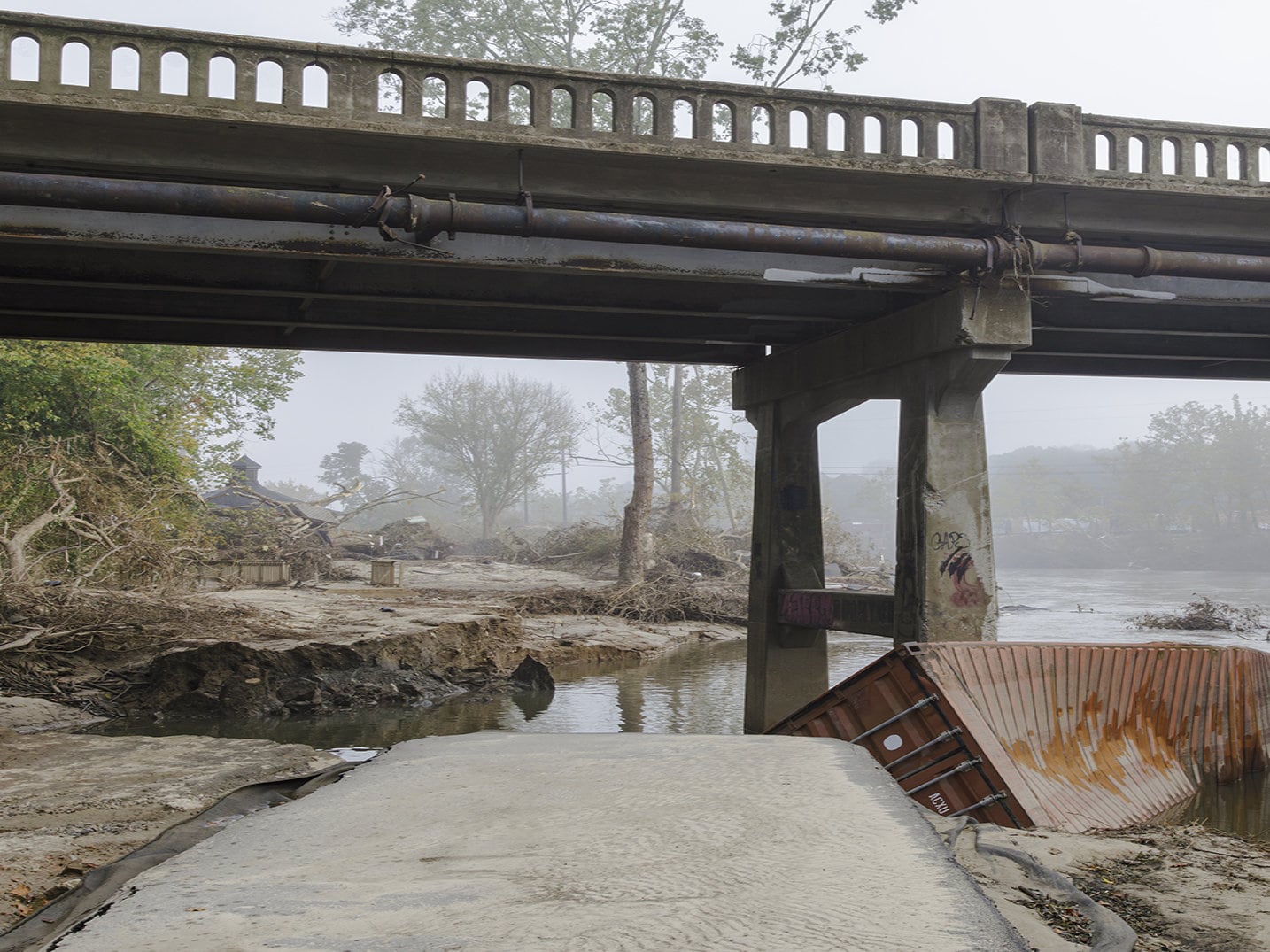
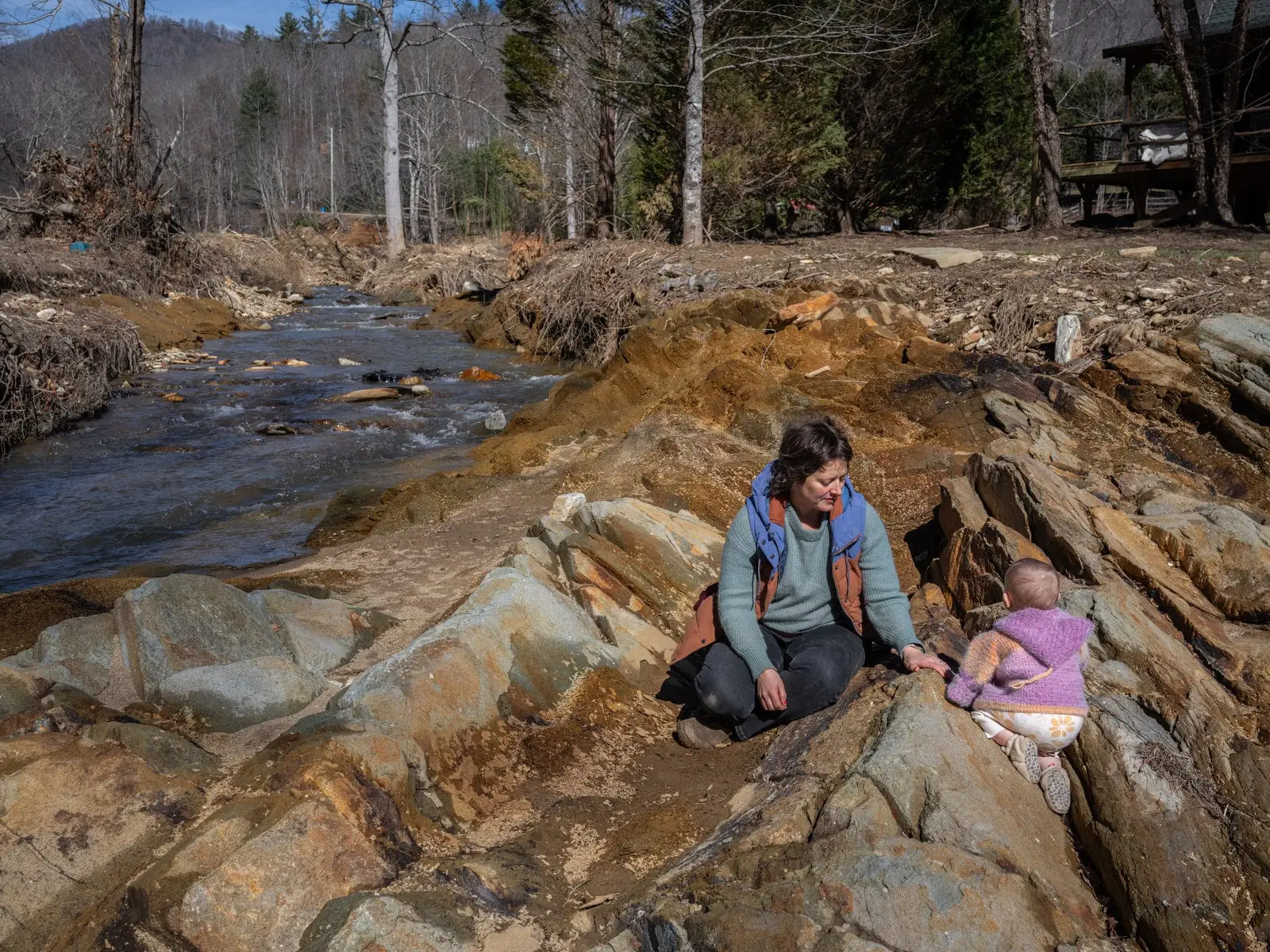
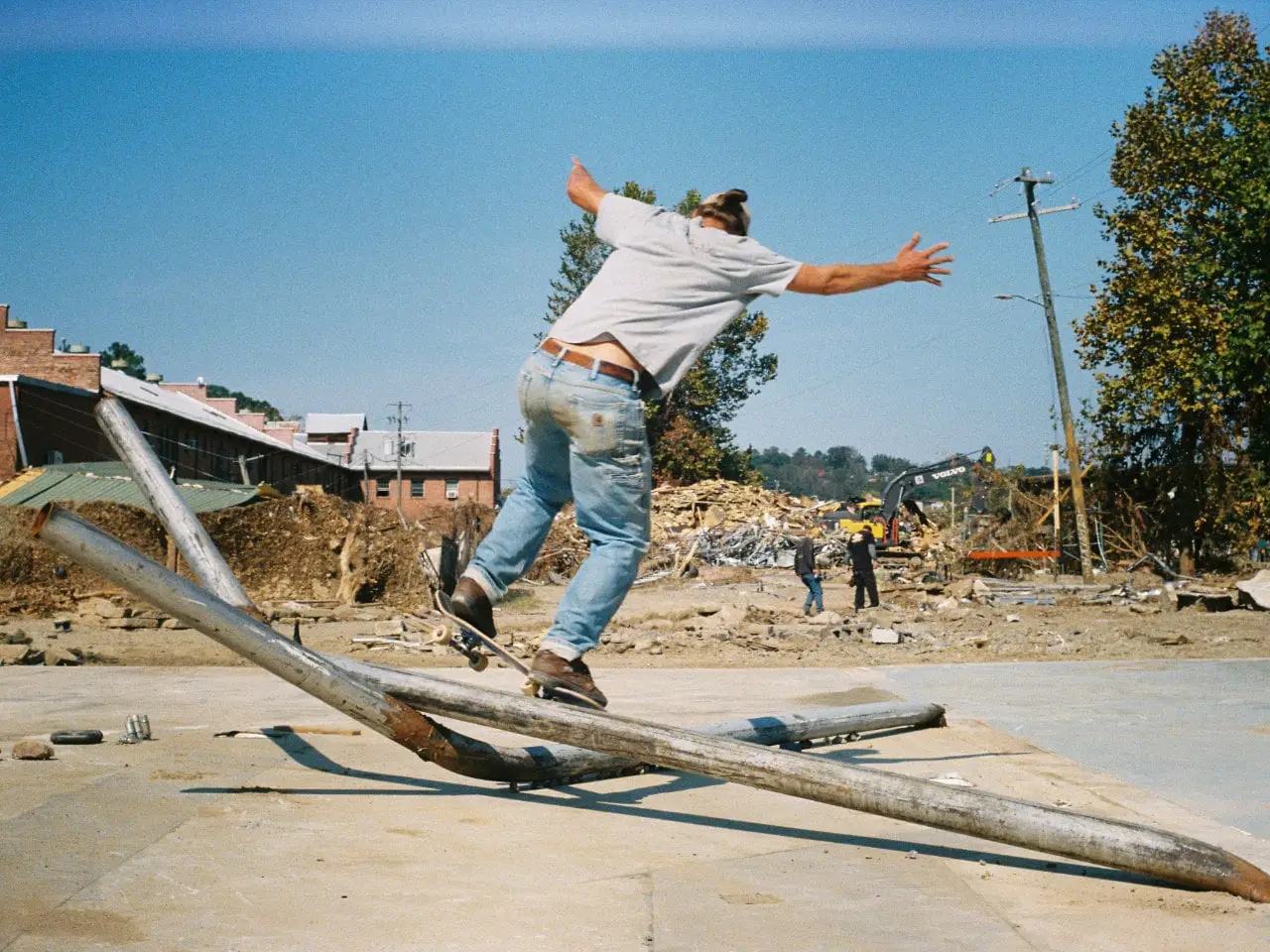
We also recognize the critical role of storytelling and reflection as part of this work. Dogwood was proud to support “Watermark,” a retrospective photo exhibit on Hurricane Helene. Curated by Kai Lendzion and Naomi Lee, it featured the work of 21 local photographers. Many photos from the exhibit appear throughout this publication. We thank them for documenting the human and environmental impacts of the storm and lifting up the resilience and quiet healing that continues.
Thank you to all who contributed in both visible and unseen ways. Together we're creating a Western North Carolina where all people can live, learn, earn and thrive.
No Exceptions.
