
In many dental practices across North Carolina, front desk staff are shuffling appointments. A routine cleaning might be pushed back three months, or a child needing a filling might need to wait a little longer for care. The challenge is multi-pronged, but one critical factor is a dwindling supply of dental assistants and hygienists.
“I’m seeing fewer people come through my office and longer stretches of time that they’re waiting to get in,” explained Dr. Madison Crumley, immediate past president of the North Carolina Dental Society Foundation (NCDSF). “Small problems like a cavity may progress to something larger because we have all this delay in seeing patients.”
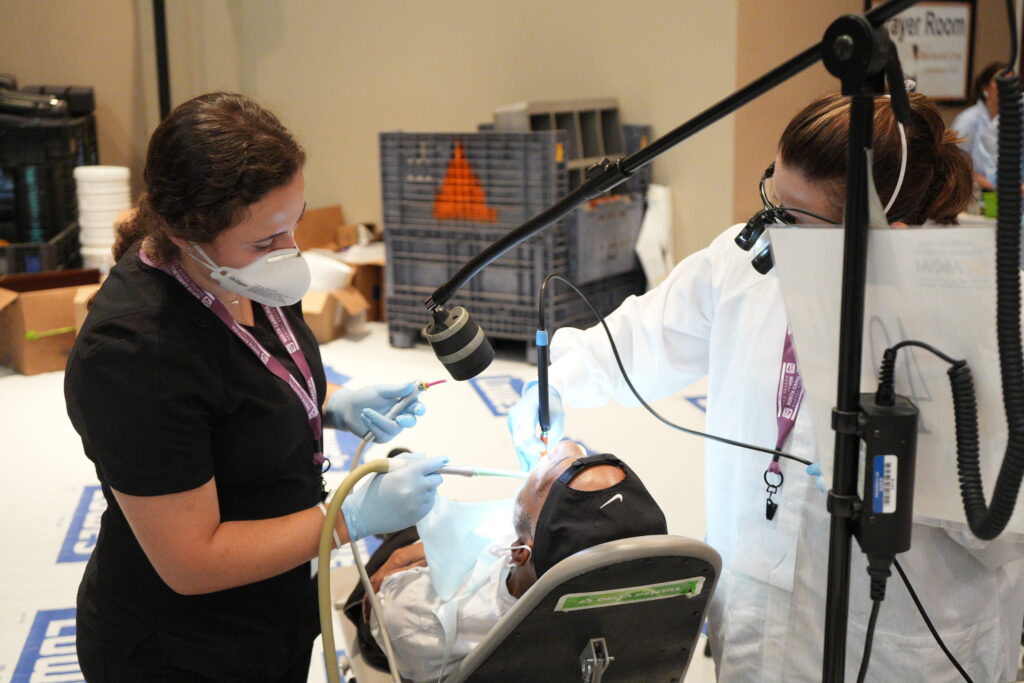
Mr. Jim Goodman, executive director of NDCSF explained that the challenge is not a new one. A shortage of assistants and hygienists has been persistent for years but was exacerbated during the COVID pandemic, when many left the profession.
“Unfortunately, it never recovered,” he said, adding that the current ratio of available dental hygienists to dentists in North Carolina is only 1.1+1.0, even though each dentist can supervise two hygienists at a time. “The supply is so low that some dentists have to do their own cleanings especially in rural communities. That’s a real challenge because the dentist really needs to be able to focus on emergent and restorative care.”
Challenges in rural settings
Preventive dental care is crucial to long-term health, but in rural Western North Carolina (WNC), access to routine dental care can be particularly difficult. “Roughly 50% of the population in the United States doesn’t see a dentist annually, and in rural areas, it’s even worse,” Goodman remarked. “What makes this work so important is that almost all dental-related problems or issues are preventable.”
According to a recent national study, 34% of individuals living in rural communities rate their oral health as fair or poor, compared with 27% of urban residents and 24% of suburban residents. A contributing factor is that 67% of rural areas are Dental Health Professional Shortage Areas.
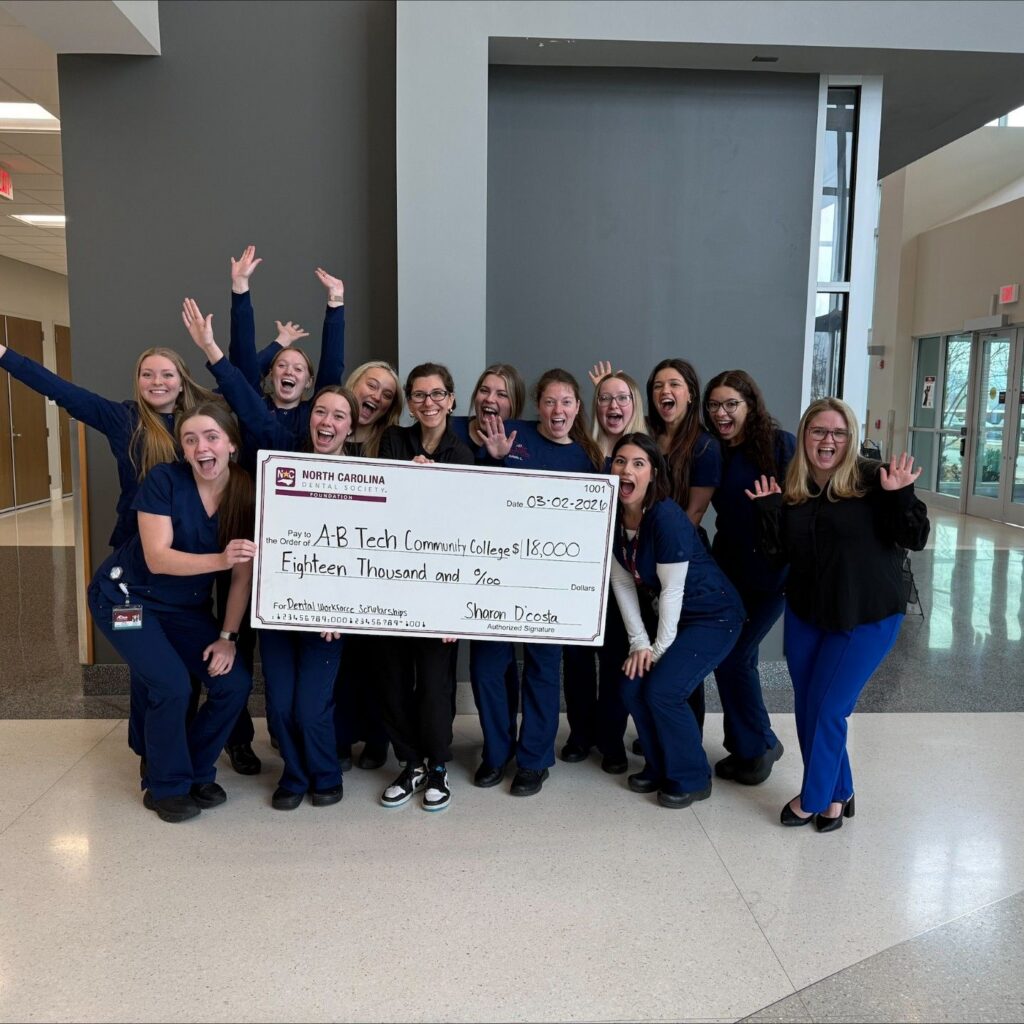
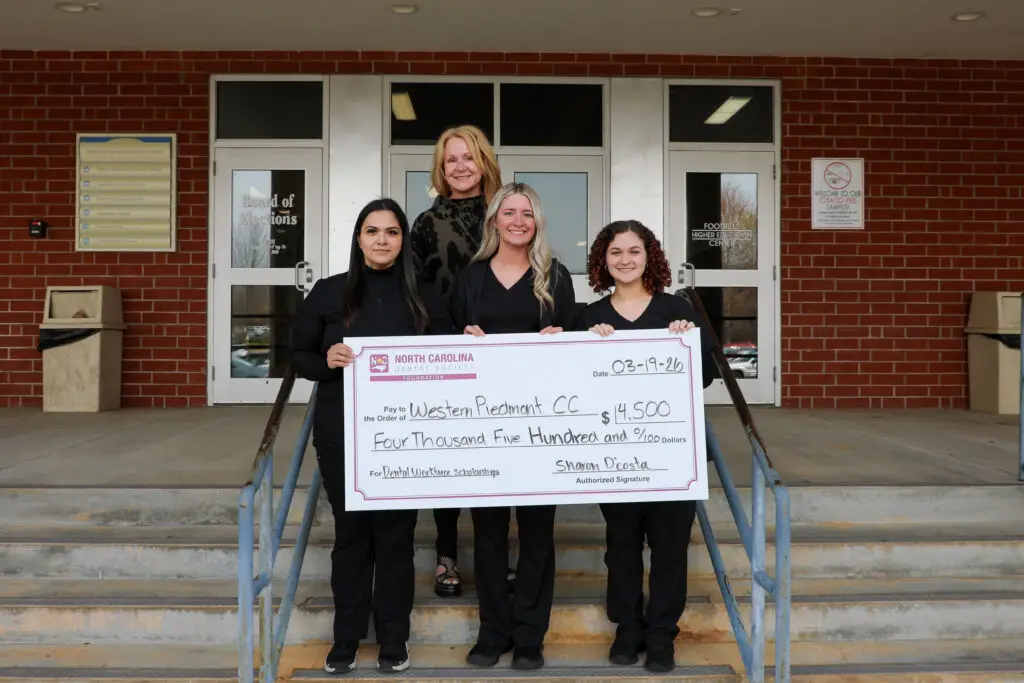
To strengthen the pipeline of future dental assistants and hygienists throughout the region, the NCDS Foundation is using a two-year $240,000 grant from Dogwood Health Trust to invest in dental hygiene and dental assisting students through scholarships at Western Piedmont Community College, Isothermal Community College and Asheville-Buncombe Technical Community College (A-B Tech). In addition to reducing a student’s financial burden, scholarships increase the likelihood that dental assistant and hygienist students will remain and practice in WNC after graduation.
Scholarships pave the way
Stacey Jenkins, director of the dental assisting and hygiene programs at Isothermal Community College, said that the NCDSF scholarships provide crucial flexibility for adult learners who often juggle the demands of work and family life while pursuing their coursework. “Our students are able to pay for mileage, childcare, books or needs within their own life while they’re in this program,” she said. “For a lot of families, especially in rural communities, it’s tough to make ends meet while you’re trying to continue your education.”
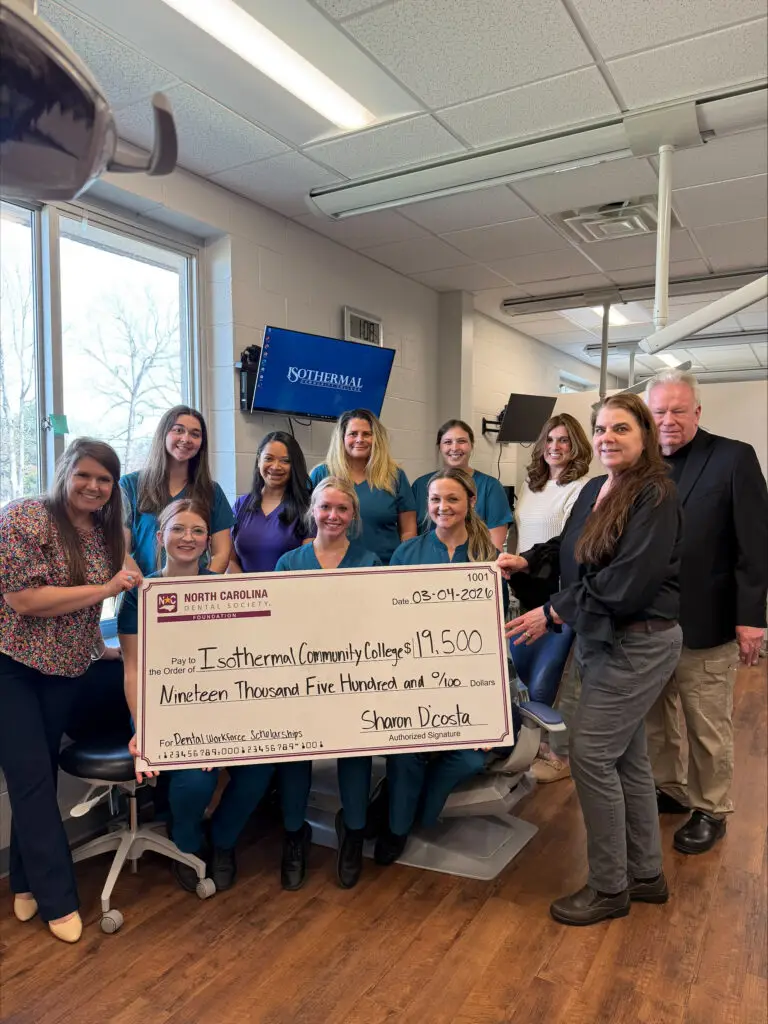
Since 2021, 152 individual NCDSF scholarships ranging from $450 to $3,000, have been awarded at the three WNC community colleges. Isothermal student Morgan Richardson said that the financial burden of pursuing her education was one of the most challenging aspects of becoming a dental hygienist. Tuition costs, along with everyday expenses, added up quickly, especially when balancing full-time school and a full-time job.
“Receiving this scholarship helped ease that financial stress and allowed me to focus on my education and clinical growth, rather than constantly worrying about how I would cover the next expense. I don’t take this opportunity for granted, and I’m using it to become the best dental hygienist can be and to give back to my community in the future.”
The work ahead
NCDSF scholarships are also bearing fruit for short-staffed dental practices. Beyond classroom-based learning, students learn by assisting in local dental offices and gain a preview of what their future careers might look like in real time. The experience is win-win, preparing students for the field and providing local dentists with a ready generation of potential new hires.
“I would say 80% of students, once they graduate, if they want a job, they’re able to get it,” Jenkins remarked. “A lot of this is through connections made through those clinical rotations, building relationships and using those as working interviews to be able to get a job.”
A-B Tech dental assistant student Izzy Lehmann is weeks away from graduation with a job offer from a local practice already on the table. “Because the program was local, I was just like, this is great—I need to take this opportunity,” Lehmann reflected. “I don’t want to move; I want to be near my family and to even have my own family in the future. A dental career is going to allow me to stay in my community.”
For students like Richardson and Lehmann, successful completion of their programs can result in a good-paying job in a respected profession with opportunities to grow. But for rural communities in WNC, these benefits could be even more transformative: shorter wait times for care, healthier families and more providers committed to strengthening the region’s oral health ecosystem.
