
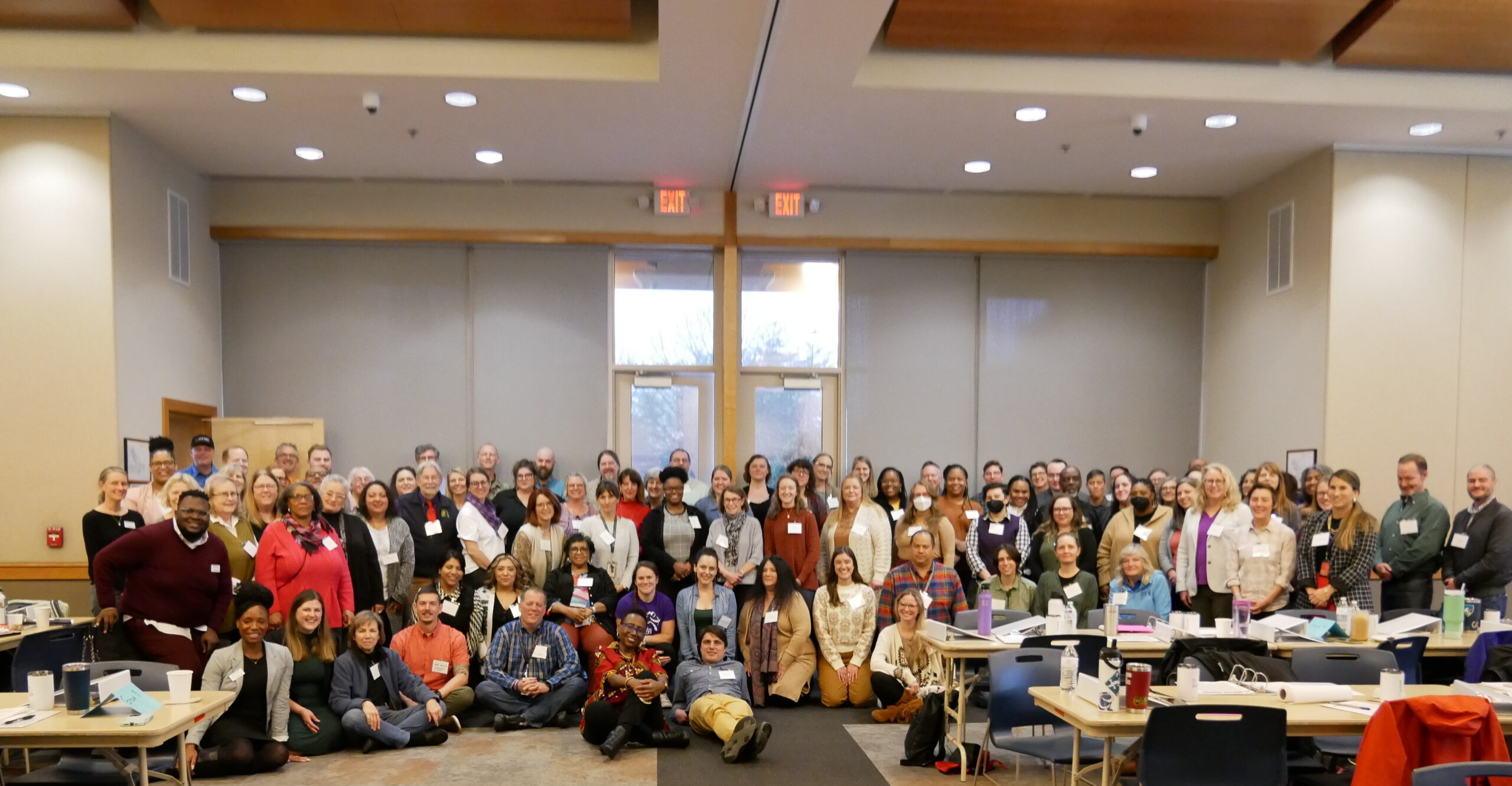
Childcare challenges for working families don’t end once kindergarten begins. According to Elizabeth Anderson, director of The North Carolina Center for Afterschool Programs (NC CAP), a strong economy relies on a care and education ecosystem that includes afterschool and summer programs for K-12 youth. For the last two years Anderson has worked closely with 47 afterschool partners through Dogwood’s WNC After 3PM Collaborative, created in 2024. She recently weighed in on the essential role afterschool programs play in supporting WNC families and businesses, the challenges programs are facing, and the innovative ways local leaders are working together to build a stronger network to benefit WNC for generations to come.
Q: What do parents and employers say about afterschool programs?
A: Working parents rely on afterschool programs – for many, it’s a lifeline that helps them keep their job and provide for their family. Simply put, parents can’t focus on work – and some even leave the workforce altogether – when they don’t have a safe place for their kids to be during the workday. There are two significant gaps for most working parents: the hours at the end of the school day and the months at the end of the school year. Afterschool and summer programs fill these gaps.
I also hear from employers who now view afterschool as a benefit similar to health insurance. They approach it like, “In order for my employees to be able to show up fully in the workplace, they need to be healthy, and they need to know that their children are taken care of.” One study found that lack of afterschool programs costs U.S. employers up to $300 billion each year due to lost productivity. The bottom line: parents are more productive at work when they know their children are safe and supervised.
An investment in afterschool is so much more than an investment in education and childcare – it’s also an incredibly effective investment in our economy and workforce.
Q: What role does afterschool play in supporting the next generation of the workforce?
Employers are beginning to see afterschool as an untapped resource for finding and developing their future workforce. Many programs now offer real-world learning opportunities that help young people build skills employers need, like teamwork, critical thinking, leadership and communications. They also help youth understand what jobs are out there. Through NC CAP’s STEM coalition for example, afterschool providers and industry partners are coming together to look at workforce development strategies. While we’re helping young people explore opportunities and hear from employers about where there is demand, we’re also working on partnerships that bring those kids into those careers.
An investment in afterschool is so much more than an investment in education and childcare – it’s also an incredibly effective investment in our economy and workforce. Kids who participate benefit for life with higher educational attainment and higher earnings. And when children have both early childhood education (ECE) before kindergarten and afterschool programs in elementary and secondary school, those benefits increase even further.
Q: How does Dogwood partner with afterschool programs in WNC, and what’s been the impact so far?
A: Dogwood has been a real leader in thinking about afterschool, not as individual programs, but as a whole ecosystem in WNC. Their multi-year investment has helped stabilize the field and given programs the opportunity to think about the bigger picture. Dogwood’s visionary approach includes asking providers what they need, listening, and supporting local leaders’ efforts to meet the needs in their own communities. In this way, Dogwood makes the dollars go further by also making space for folks to talk to each other and address challenges they’re collectively experiencing.
We have 47 member organizations in WNC After 3PM Collaborative, with almost 100 people showing up to meet. Some of the most exciting innovation I’ve seen is in the kinds of partnerships that are developing. For example, after Helene struck, this network was instrumental in sharing resources and information with communities. These programs worked together to identify needs and help distribute food, supplies and urgently needed support. When there was widespread disruption, afterschool programs found ways to keep serving kids – they were crucial for parents and families to return to work.
Collaborative members also share learnings and best practices, and some even share staff and resources. We’ve also talked about what it would look like to fundraise and grant raise together or share data about afterschool that shows collective impact across the entire region.
Having those connections and opportunities to build shared solutions helps strengthen the afterschool network across the region. I believe this work is positioning WNC as a leader in the afterschool space—what we’re trying and learning here can help inform efforts to expand and improve programs across the state and beyond.
Q: What challenges are WNC’s afterschool providers facing?
A: Funding, staffing and providing transportation for youth are major challenges. Our child care system – both for afterschool and ECE — is fragile. It relies on temporary, insufficient and patchwork funding. As a result, providers struggle to hire and retain staff and to keep their doors open. A lot of staff come into the field for the love of the kids, but if programs offer part-time hours, low wages, and no access to benefits, they are sometimes just not able to stay. Some programs rely on employing school teachers, but with the growing demands placed on teachers’ during afterschool hours, there is less bandwidth to participate.
At the same time, families struggle to find and afford a program. Statewide, more than 660,000 students aren’t able to access a program in their community. We’re not meeting that demand in WNC either, especially in rural areas where lack of transportation for kids to and from programs is a significant barrier.
I believe this work is positioning WNC as a leader in the afterschool space—what we’re trying and learning here can help inform efforts to expand and improve programs across the state and beyond.
Q: What gives you hope for the future?
This is a critical moment for afterschool programs, here and nationwide. At the federal level, afterschool is facing an existential threat with the possible elimination of 21st Century Community Learning Center (21st CCLC) funding, which is the only federal funding dedicated to afterschool and summer learning programs.
This year, North Carolina received more than $35 million for providers running 21st CCLC programs. Together they serve more than 37,000 students in 307 communities. Our kids, families and businesses cannot afford to lose these programs. That’s also because this one investment leads to something much bigger. Each 21st CCLC grantee has an average of nine partner organizations and a typical program receives $67,000 from partners. And while it’s inspiring how programs put resources together to make the biggest impact possible, it’s clear that the public investment is critical. We need more public and private funding to make afterschool available to all the families who want and need it.
What gives me hope is how incredibly nimble afterschool programs are. They’ve found ways to meet the need in their communities during the pandemic and post-Helene because they’re led and staffed by innovative people who care deeply about the families they serve.
I’m also encouraged by the strong public support for programs. In North Carolina, 89% of parents support public funding for afterschool, including 91% of Democrats, 88% of Republicans and 89% of Independents. That’s because parents recognize the value of afterschool and all the ways their kids and their family benefit.
It will take all of us working together – programs, parents and leaders – to build a stronger, more sustainable system of care that will better serve our kids and families now and for generations to come.
