
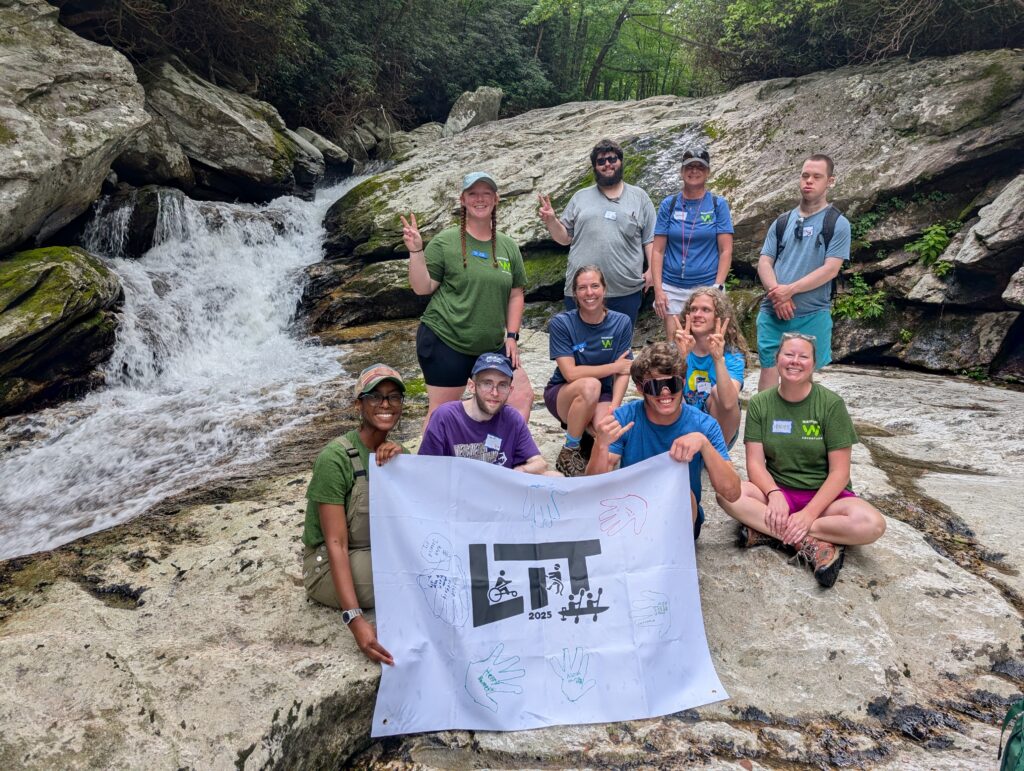
When Jacob initially joined a small group of peers in the Leaders In Training (LIT) program to venture into the Western North Carolina (WNC) wilderness last summer, he was admittedly uncertain. But as a participant in Waypoint Adventure NC’s inaugural cohort of young adults ages 18 to 28 with intellectual or developmental disabilities (IDD), Jacob decided to dive headfirst into an interactive experience that not only promised adventure – but also the opportunity to develop and strengthen leadership skills and new friendships with others.
LIT is one of Waypoint’s two new outreach and education programs that harness the power of adventure for students and young adults. Both programs were brought to life in Western North Carolina last year through a $270,000 grant from Dogwood Health Trust and have already demonstrated high levels of engagement and success. The grant funded a new staff position, scholarships for participants, a wheelchair-accessible, 15-passenger van and specialized outdoor equipment geared towards accessibility.
Leaders In Training: Addressing the Transition Gap
For Jacob and other young adults with IDD, the LIT program helps address the often isolating “transition gap” into adulthood, when many school-based services decline as young people move into adult-oriented, eligibility-based systems.
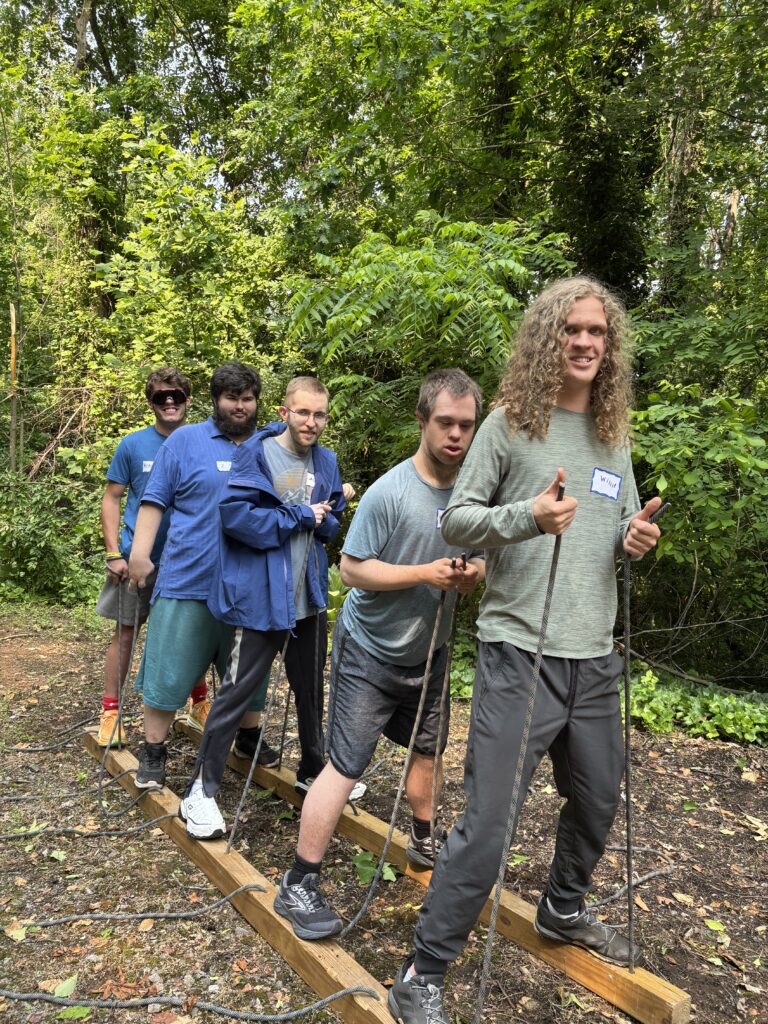
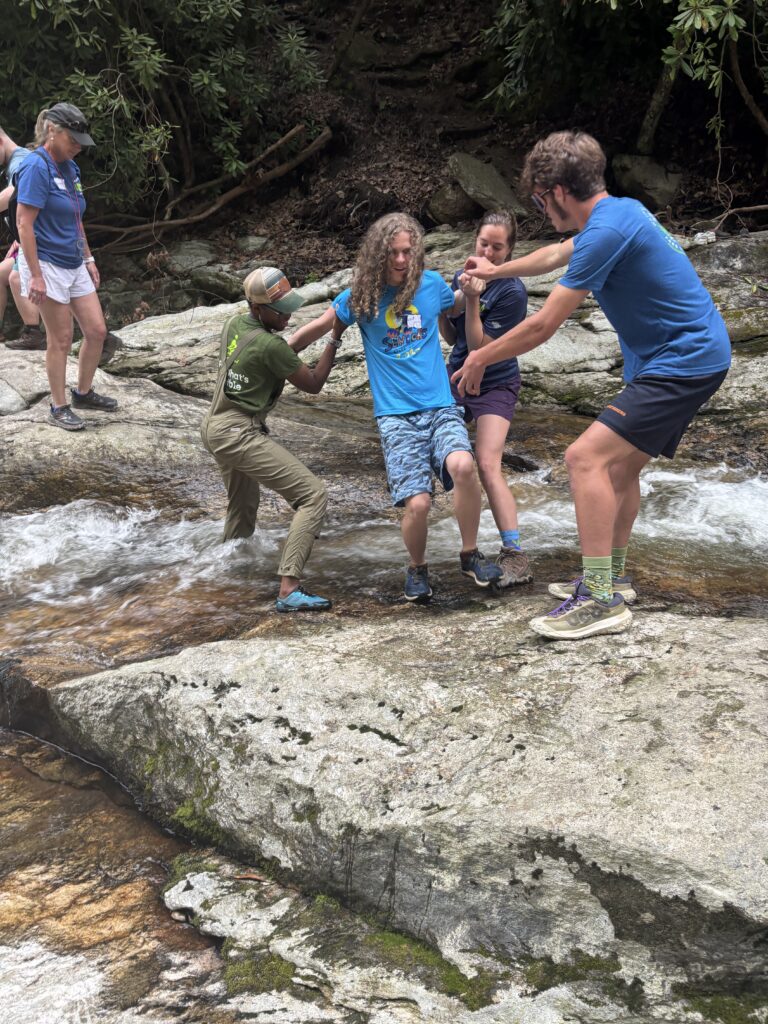
Through excursions such as rock climbing, kayaking, hiking and an overnight backpacking trip, Jacob built important connections, found a sense of community with peers and translated practical outdoor skills into life and leadership lessons. “It was the first time in a long time that I’ve been able to hang out with people around my age,” he reflected at a graduation ceremony held for participants. “I wasn’t sure how we were going to accomplish all our goals, but together, we did. One piece of advice that I would give future LIT participants is, just go for it. It’s OK to be scared, but do not let that stop you.”
While Waypoint’s mission is to “challenge people with disabilities to discover their purpose, talents and strengths through adventure,” confronting misperceptions about a person’s ability is sometimes the first challenge for participants to overcome, explained Waypoint Adventure NC Director Adam Combs. “People with disabilities often either hear from others, ‘This isn’t for you,’ or sometimes they make that assumption for themselves. We want them to know, ‘Yes, you can do these things. The reality is, it is for you,’” Combs stated about LIT’s purpose.
Waypoint Education: Empowering School-aged Youth
But Waypoint doesn’t just support young adults like Jacob. For younger school-aged youth with IDD, their new education program partners with schools and exceptional children’s classrooms to customize a five-part, tailored curriculum around specific social and character goals for students. Past program series focused on topics such as self-determination, teamwork, perseverance and problem solving.
Waypoint Education Program Coordinator Theresa Scott, whose position was created through the Dogwood grant, explained that sessions alternate between in-classroom team-building exercises and out-of-classroom adventures such as kayaking or tandem bicycling, allowing students to practice crucial skills in dynamic, real-world settings. “I love starting with a group, intentionally pouring into it, and watching the progression with students,” Scott said. “When schools have our programming, it is transformative.”
In the program’s first year, 37 students participated from Owen Middle School and IC Imagine and Smokey Mountain High Schools. Now in its second year, the program has expanded to include Owen High School, Franklin School of Innovation, Hillandale Elementary School and Hendersonville High School.
Growing Demand Underscores Need for Specialized IDD Services
As interest in both programs continues to grow, so does demand for specialized services for individuals with IDD. Waypoint’s four-person team is already in high demand as more schools and families seek opportunities for their students and young adults.
More than 230,000 adults and children in North Carolina live with IDD, underscoring the need for programs like Waypoint’s that provide accessible, community-centered experiences. To help address this need, Dogwood also supported organizations last year like MAHEC, which works to increase access to providers in rural communities, and Community Health Network of Western North Carolina which connects primary care pediatricians with diagnostic tools to help identify and address these challenges earlier among children.
For Combs, the grant from Dogwood has helped the two programs to flourish, and he hopes to increase resources and expand to even more participants as the organization builds its capacity and profile. “Right now, our goal is to impact as many people as possible. We’ve seen firsthand the transformative power of adventure. In addition to working towards social and character goals and leadership development, some of our most important outcomes are friendship and community building and having a place to belong,” he said.
For participants like Jacob, that transformation is both real and personal. He credits Waypoint with empowering him to become a leader, noting that “Because of the Leaders In Training program, I have improved at talking to people. I have grown as a leader.”
