
At 4:30 on a Thursday afternoon at Saluda Elementary School, dozens of elementary students work together to solve an archaeological challenge. They are surrounded by piles of brightly colored plastic LEGO® bricks, brows furrowed in concentration. Today, they’re building a model of a robot capable of delicately removing sediment from imaginary ancient artifacts. Tomorrow, they will write code that tells the robot how to get the job done.
Elizabeth Taylor, site coordinator at C4C at PEAK After School in Polk County, provides around 40 students daily with academic and social support after school. Participants in her program receive enriching hands-on learning experiences in a safe environment. This includes the opportunity to learn with LEGOS in a new STEM (Science, Technology, Engineering, Math) program.
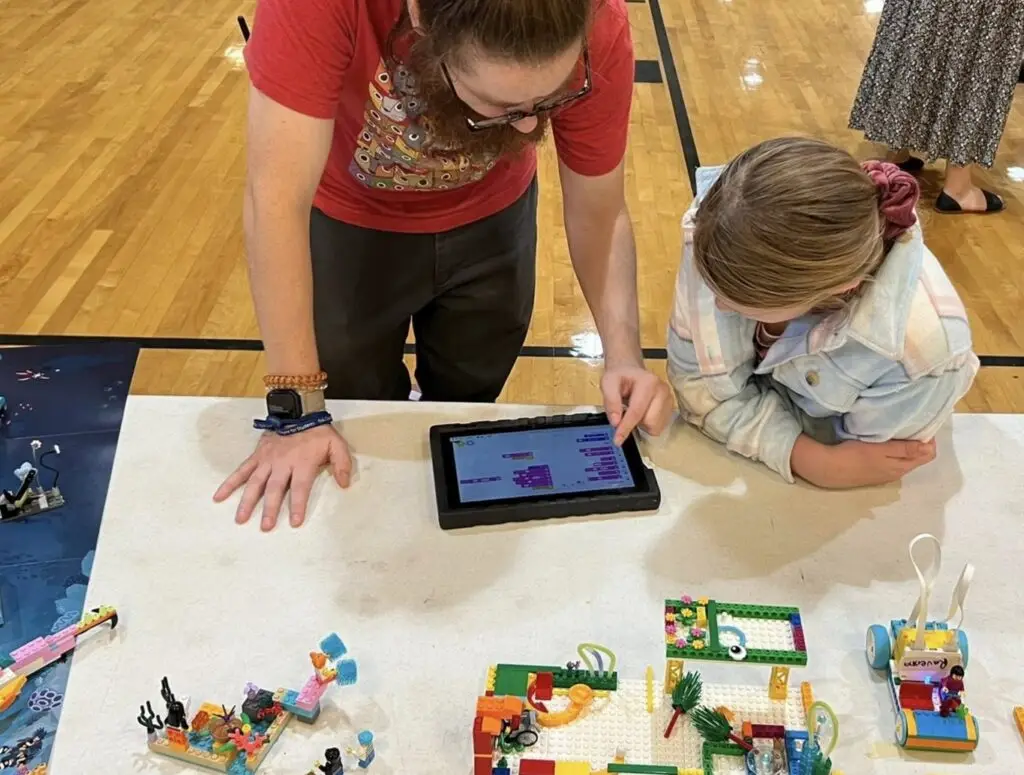
“Through this program the kids aren’t just students — they’re investigators,” Taylor remarked, adding that this year’s archaeological theme allows students to learn with LEGOs through fun, hands-on challenges that help them gain real-world problem-solving experiences. “It’s huge that our children get to be part of this,” she said.
Thanks to the regional nonprofit STEM West, federally funded 21st Century Community Learning Center sites serving elementary schools in Polk and Yancey County are participating in the FIRST (For Inspiration and Recognition of Science and Technology) LEGO League.
Carol Moore is the CEO & President of STEM West, which supports initiatives that break down barriers to learning, ensuring all students — regardless of background or circumstance — can engage with STEM. A three-year grant from Dogwood Health Trust is helping Moore expand STEM in afterschool spaces for children who might otherwise have limited access or exposure.
“I’m focused on rural communities, Title I schools and federally funded afterschool programs, and I am pushing west,” Moore said. “I want resources and funding for high-quality STEM programs and engagement for each and every student.”
Dogwood grant funds provide age-appropriate LEGO bricks and materials, curricula and STEM-focused professional development for afterschool staff. By the end of the grant Moore said seven elementary afterschool programs in Polk and Yancey counties will be fully equipped.
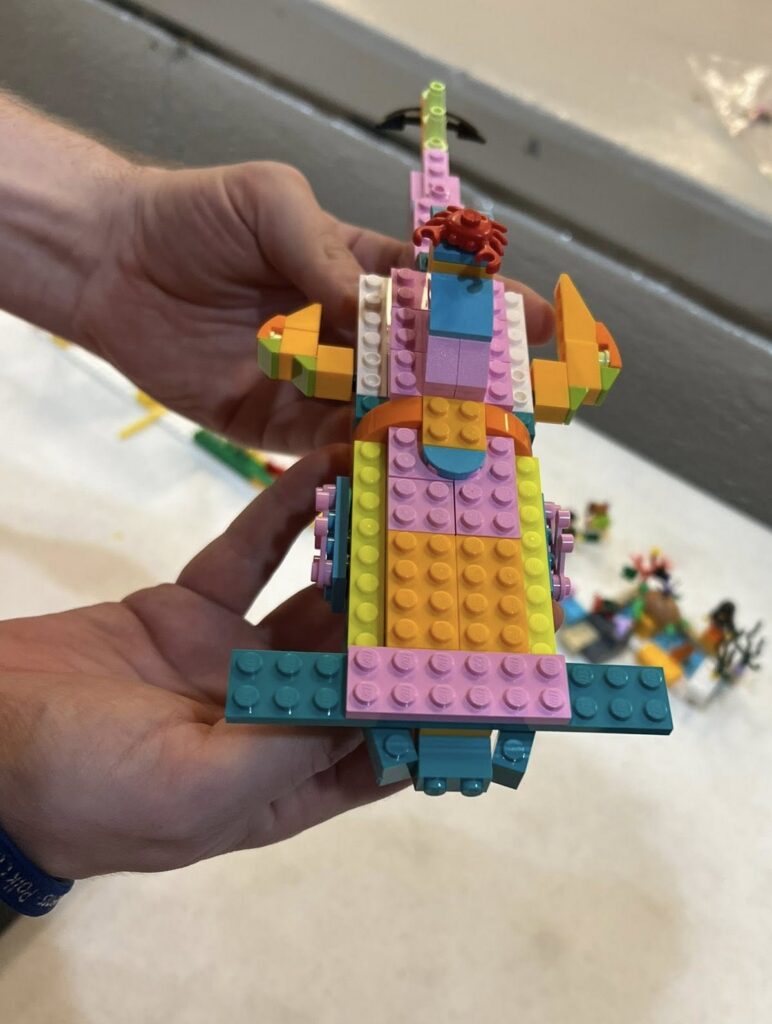
STEM programs have the potential to benefit young people both during their early years and later in life. According to the Afterschool Alliance, while jobs requiring STEM skills are growing rapidly, they lack qualified candidates. Afterschool STEM programs enroll 7 million students nationwide and can play a vital role in addressing this gap.
Andrea Allen is the afterschool program director of Yancey County’s Learners and Leaders program, where roughly 180 children participate daily between three schools. In addition to the technical and workforce development benefits of STEM programs, Allen said critical soft skills are being developed through each LEGO challenge as well.
“So many students in this day and age are engrossed in screen time. These experiences get them to unplug, work together and collaborate, using critical thinking and problem-solving skills,” she reflected. “They have to listen to each other, be patient and thoughtful, follow instructions and interact as teammates.”
Allen notes that parent, teacher, and student surveys at the conclusion of the project’s second year reinforce this observation. “LEGOS are always the number one activity choice for our kids, and our teachers are reporting an increase in social skills of getting along and working together,” Allen said, adding that 80 percent of teachers surveyed strongly agreed that the STEM West project helped students build confidence in engineering and coding and develop interpersonal skills through collaboration.
The results are encouraging connections with families as well. “The kids can’t wait to do these activities, and they’re talking to their parents about what they’re doing, which strengthens that parent, student, and school connection,” she continued.
At Saluda Elementary School, Taylor is seeing similar victories emerge. “All these kids are so different in what will get them to connect, and they are loving, living and breathing this program,” she said.
