
A few years ago, Burke County senior citizen Vivian Lawrence had never grown her own food. Today she confidently tends rows of vegetables, fruits and herbs at a local community garden discovered through a class offered by Cooperative Extension in Burke County called the Farm to Senior Services Project.
Over the last three years, Lawrence has become both an avid gardener and a vocal supporter of local food access, especially for older adults across Western North Carolina. Gardening started out as something new to try, but it soon became part of her own personal health transformation.
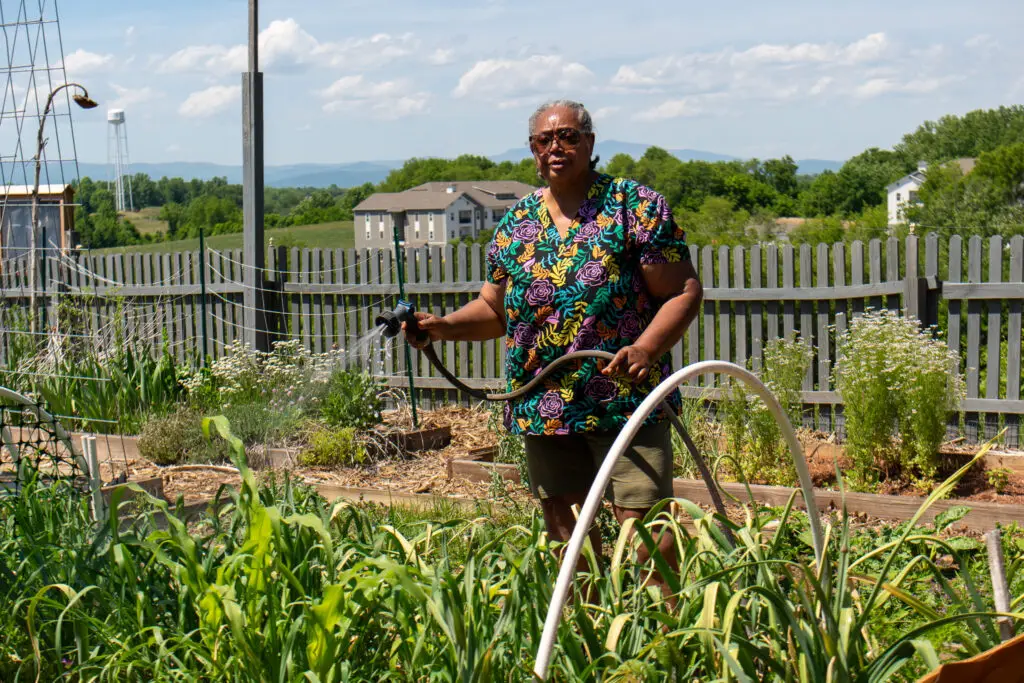
“I was eating what was killing me,” she said, reflecting on health conditions that were leading her to pursue a healthier lifestyle.
In rural WNC communities like Burke County, access to healthy food can be difficult for older adults. Transportation challenges, rising grocery costs and limited availability often stand in the way of getting a healthy meal, and Lawrence said many seniors simply end up resorting to eating what is cheapest and easiest because healthier choices are not always realistic options.
With individuals over the age of 60 making up the fastest growing age demographic in the country, distinct needs within this population are on the rise. Many challenges are especially acute in rural communities, such as housing, available transportation options, social isolation, accessible medical care, and the challenges in delivering services in rural places.
“As Western North Carolina’s population continues to age, we have an opportunity to reimagine what it means to grow older in our communities,” said Kaitlynn Lovelace, Program and Strategy Officer at Dogwood Health Trust. “Healthy aging is about much more than health care. It’s about ensuring older adults have access to the resources, relationships and supports they deserve to remain active, connected and engaged in the communities they helped build. Through the Older Adult Collaborative, we’re investing in organizations that are strengthening those supports today while helping create a region where older adults can thrive with dignity, connection and opportunity.”
Launched in 2025, Dogwood Health Trust’s Older Adult Collaborative brings together 15 organizations serving WNC to help meet these needs through individual projects that focus on creating a more connected, stronger and robust older adult ecosystem that supports aging with dignity. Grantees also work together through the collaborative to share ideas, deepen networks, strengthen local capacity and identify long-term strategies that increase support for older adults and those who care for them.
The Center for Environmental Farming Systems at NC State University, which helps deliver the Farm to Senior Services Project, is using their two-year, $145,200 grant to expand their program from McDowell County into Burke County, Yancey County and the Qualla Boundary of the Eastern Band of Cherokee Indians.
Taylor Lynn, an agent with Family and Consumer Sciences Extension in Burke County, said that a partnership with Empowering Mountain Food Systems from the Center for Environmental Farming Systems is bridging these gaps to foster resilient local food economies and healthy rural communities across WNC. In addition to aging well through improved nutrition and a healthier lifestyle, Lynn adds that participants gain a sense of community and a point of connection.
“I’m hoping it can also garner some stronger social connections between our seniors,” she said. “The role of Extension in bringing these local seasonal foods to older adults is really education first,” Lynn said. “We partner with seniors. We partner with farmers. We all just work together.”
Farm to Senior Services is just one example of many innovative approaches that support older adults in Western North Carolina. While each organization in the collaborative works differently, the shared focus remains the same: improving quality of life through connection, resources, innovation, education and community support, which is music to the ears of older adults like Vivian Lawrence.
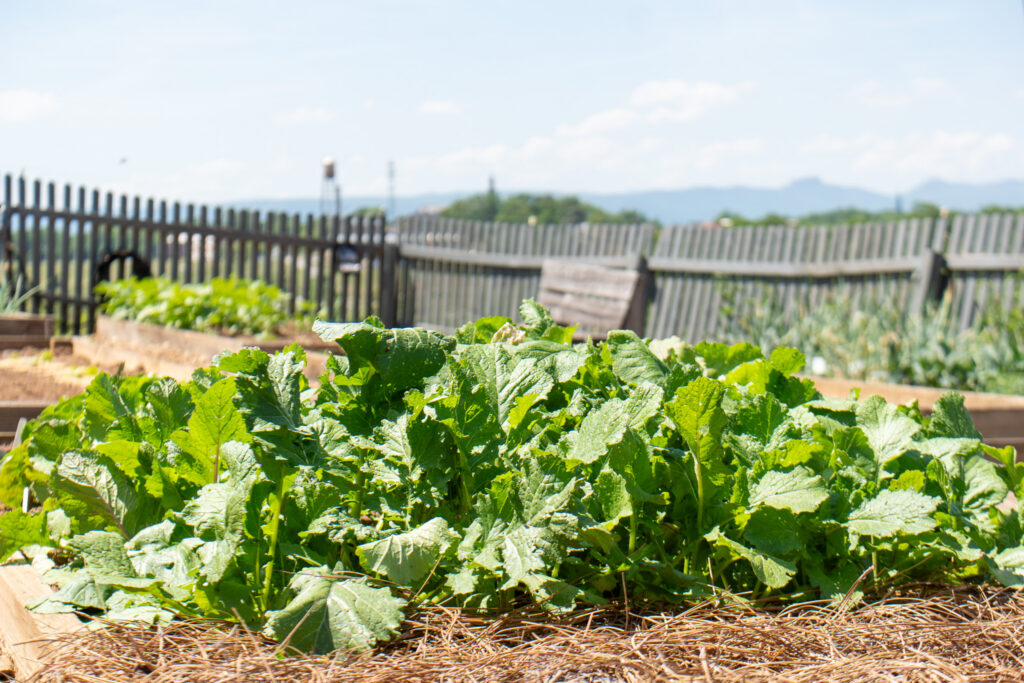
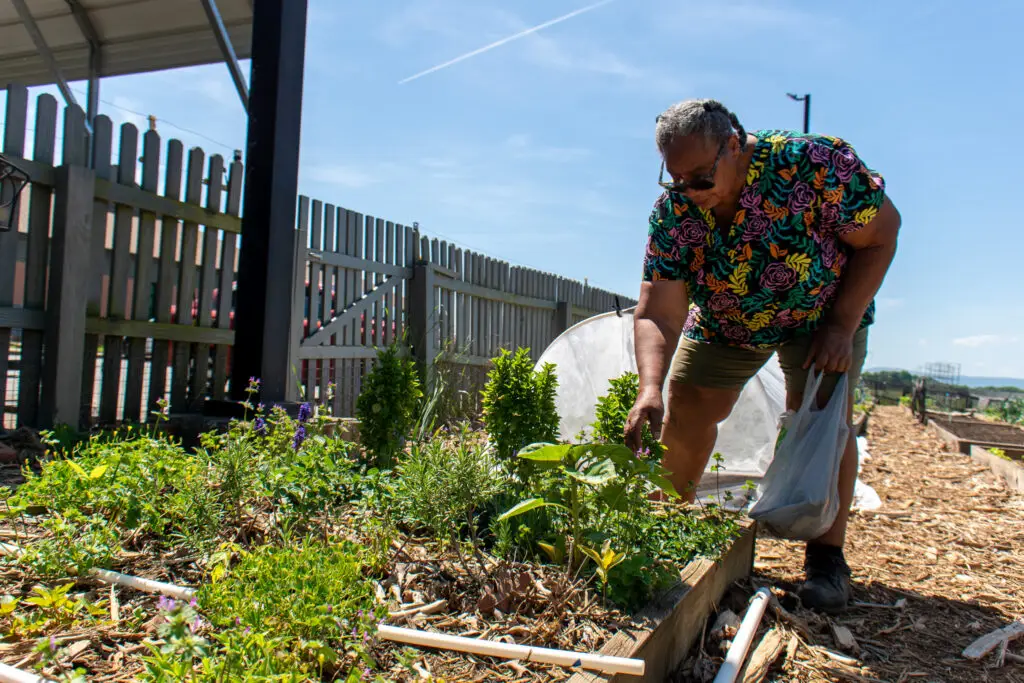
Lawrence is now in her third growing season and cultivates a wide range of produce and herbs, including tomatoes, greens, ginger, chamomile and garlic. What began as an effort to improve her eating habits has grown into something much deeper. Gardening has given her a routine, a sense of purpose and a connection to others in the community.
“That’s been a blessing to me,” Lawrence said.
